MARC LEVIER: The Trump administration must stop partnering with mining giants tied to China
Should the Trump Administration negotiate a term that requires Rio to keep American resources in America at this critical time of Chinese domination?
The Trump administration is taking the proper steps to secure America's critical mineral supply chains. President Trump has already signed two significant Executive Orders this year. The first, Immediate Measures to Increase American Mineral Production, came in March. Among other things, this order invokes the Defense Production Act to expedite mineral production, streamlines the permitting of mining projects, and utilizes the U.S. International Development Finance Corporation and the Export-Import Bank to support both foreign and domestic projects that strengthen supply chains for U.S. processing. A month later, the president signed Unleashing America's Offshore Critical Minerals and Resources, which tasks the Department of Commerce with expediting permits for offshore exploration and recovery.
Federal agencies in Washington have since followed suit to implement President Trump's directives. By June, the Permitting Council had added 29 critical mineral production projects to its dashboard to ensure transparency and accelerate their environmental review process under the FAST-41 program. Recently, the Department of the Interior's U.S. Geological Survey (USGS) released its 2025 Draft List of Critical Minerals, which, importantly, and for the first time, includes copper. The USGS concurrently issued a report outlining a new model for assessing how potential supply chain disruptions could affect the U.S. economy. This new model "assessed the potential effects of over 1,200 trade disruption scenarios of 84 mineral commodities on 402 individual industries and the U.S. economy overall."
As these great strides are being made, policymakers are now faced with a pressing question: who will undertake all of this exploration, production, and processing? This is where the Trump administration must wade carefully. There are many mining companies with which the U.S. government can partner. There are companies big and small, ranging from those with a century-plus of experience to industry newcomers. What's Washington to do?
Simply put, a blunt assessment is needed. The White House and federal agencies shouldn't partner with, nor promote, mining and metals companies beholden to China. Doing so would not only contradict the administration's existing policy positions vis-à-vis Beijing but also jeopardize America's ability to meet future mineral demand. In this light, it's worth highlighting one example whose important details often go unreported.
Let's examine Rio Tinto, the British-Australian multinational and the world's second-largest mining company. The company owns and operates many assets, including the Kennecott Copper Mine outside Salt Lake City. Rio Tinto maintains state-of-the-art technology from mine to smelter, with global operations in a variety of minerals mined and produced. The company's ability is not up for debate. The real question is, are they a reliable partner?
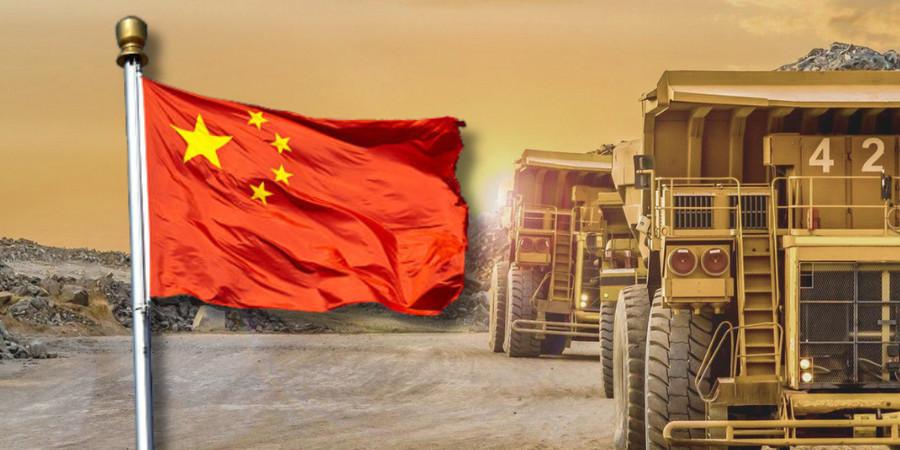
The answer is no, and here's why. What you won't readily see in the news is that Rio Tinto's largest shareholder is the Aluminum Corporation of China, known as Chinalco. Chinalco owns 14.56% of the company. That's right, a Chinese state-owned corporation owns more of Rio Tinto than the company's next four largest shareholders combined.
Additionally, China has grown "to become Rio Tinto's largest customer with about 250 million tons of [copper products] shipped each year." In fact, Rio Tinto sells approximately 57% of its annual production to China. Are copper anodes and wire from Rio's Kennecott operation ending up in China? Sure, China pays a reasonable price. But is that what America needs?
Similarly, while considerable attention has been paid to the proposed mega Resolution Copper Project near Phoenix, very few reports have detailed the project's ownership. Between on-and-off again permits and over $1 billion in development and permitting costs, one might overlook that Rio Tinto owns 55% of it as part of a joint venture agreement. That means that Chinalco owns roughly 8.25% of Resolution, one of North America's largest copper deposits. Again, is there a requirement to sell to China? Should the Trump Administration negotiate a term that requires Rio to keep American resources in America at this critical time of Chinese domination?
In recent commentary, trade association executive Camilla Simon honed in on what's at stake at Resolution, writing, "If reducing America's reliance on hostile foreign powers for critical minerals is a national security priority—a goal that leaders across the political spectrum broadly support—then we should take a hard look at what's happening." As such, the minerals and metals mined by Rio Tinto on American soil have no guarantee of use by American businesses and consumers. This is certainly not America First, and President Trump should take note of that.
Around the world, Rio Tinto's ties to Beijing run even deeper. The company has developed a partnership with China's State Power Investment Corporation to demonstrate a fleet of battery-swap electric haul trucks in Mongolia. There's also investment in a "Western Range iron ore project in Western Australia, a joint venture between Rio Tinto and China Baowu Steel Group." And Chinalco returns, this time in the Republic of Guinea, with SimFer, "a joint venture between Rio Tinto and CIOH, a Chinalco-led joint venture with Baowu, China Rail Construction Corporation, and China Harbour Engineering Company."
As America and China vie for technological, economic, and geopolitical supremacy, the critical minerals and metals embedded in consumer, industrial, and military markets have become central. Key to winning this race will be Washington's ability to pick the right partners that will source and develop these building blocks of life in America's best interests. With so many different production regions and minerals, I don't know which mining companies can best meet each of Washington's specific needs. What I do know is that Rio Tinto, an increasingly growing arm of the Chinese government, shouldn't be one of them.
Marc LeVier is a seasoned veteran of the mining industry with over 50 years of experience as a degreed engineer, manager, and executive in many different mineral domains.
Related
More World