Opinion
ARI HOFFMAN: Seattle didn’t elect a Socialist—it rejected a terrible mayor
This wasn’t a socialist revolution. It was an incumbent collapse.
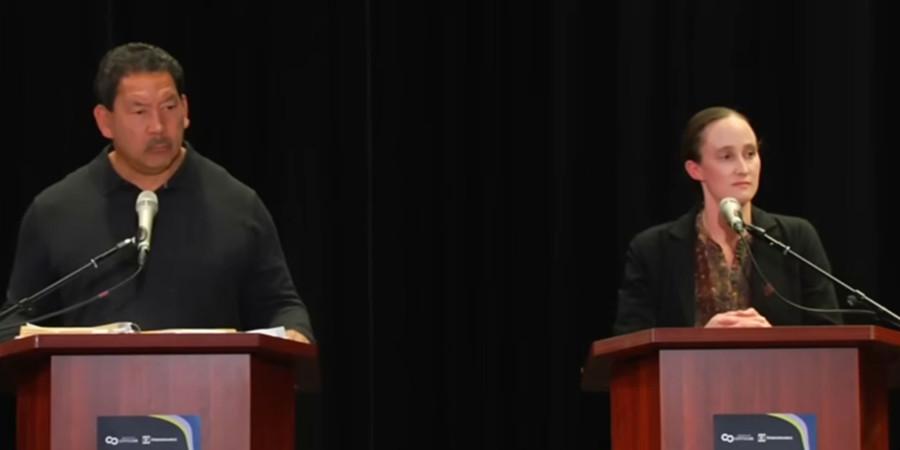
In Seattle’s mayoral race, commentators across the political spectrum are scrambling to interpret how a self-identified democratic socialist like Katie Wilson surged ahead in the late count. But the explanation is far simpler, and far more damning, than the national headlines would have you believe: incumbent Bruce Harrell handed her the election.
Harrell entered office on a promise to bring Seattle back to some semblance of law and order after the George Floyd riots rocked the city. Those riots and protests culminating in the creation of a deadly autonomous zone during which Antifa and BLM seized 6 blocks of the Capitol Hill neighborhood under former Mayor Jenny Durkin, who had the nerve to call it the "summer of love."
Harrell had served in the city council and as its president, presiding over years of dysfunction on public safety, homelessness, and city governance. Voters weren’t enthralled by him in 2021, but they were exhausted enough by chaos to give him a chance.
He never used it.
Rather than reversing the policies that had hollowed out Seattle’s downtown, he largely preserved the same framework that socialists and hard-left activists had advanced for years. Encampments continued to proliferate. Graffiti continued to spread. Crime dropped slightly, but only because it was previously at record highs. Businesses fled downtown and Harrell, rather than governing with urgency, governed with ambivalence. He was too centrist for progressives, too passive for moderates, and too disconnected for the growing block of frustrated residents who needed real solutions.
In late May 2025, Harrell managed to alienate the Seattle area’s Christian population. After Antifa militants targeted a permitted Christian concert in Seattle, Harrell publicly branded the worship event a “far-right rally,” described its organizers as using “extreme rhetoric," citing the historically LGBTQ+ neighborhood in which the city had suggested it take place, and demonized his own police for stopping the violence against the group.
Christian leaders and faith-based groups swiftly condemned Harrell’s remarks as “bigoted” and rallied at City Hall, demanding the mayor’s apology and resignation for what they saw as a city endorsement of the violence against them. Harrell also managed to tick off the city's Jewish community by not providing adequate police resources to protect synagogues when pro-Hamas activists held a fundraiser for terror groups in the heart of the Jewish community on the Sabbath.
Harrell failed to act or even speak out when pro-Hamas and Antifa activists blocked streets, bridges, and freeways following the October 7 massacre in Israel. Harrell, who never misses an opportunity to talk about his glory days of playing football at the University of Washington, was silent when radicals established a violent, antisemitic Gaza encampment on the school's campus and vandalized the school to the tune of millions in repairs.
The moderate revival that many hoped for after 2021 never materialized. Harrell didn’t just fail to shift the city’s direction; he barely tried. He seemed to like the idea of being mayor but not actually doing the job.
Harrell kicked off his campaign messaging at the city’s Christmas Tree lighting last year. Instead of talking about the holiday, he rambled about abortion and LGBTQIA rights, two things that are likely never at risk in far-left Seattle.
From there, his goal appeared to be to out-progressive a progressive challenger. He bashed Trump at every opportunity and made sure to be at every announcement of any Washington official targeting the president. None of it worked. Progressives weren’t interested in backing a guy they saw as a moderate when a real progressive was in the race.
Harrell bungled answers at debates and went viral after claiming he wanted to “get to know” prolific offenders in the crime-ridden city, rather than have them put in jail. It was quite the reversal for a candidate that moderates and even Republicans vote for to restore law and order in the Emerald City.
In the closing weeks of the campaign, Wilson was everywhere: on social media, rallying supporters, urging voters to cure their ballots, and energizing her ideological base. Meanwhile, Harrell disappeared. No last-minute blitz, no visible ballot-curing effort, no rallying of supporters who were already unenthused.
It was a campaign that behaved as if reelection were owed, not earned.
When elections tighten, as this one did, hustle and visibility matter. Harrell offered neither. His campaign felt less like a fight for the city’s future and more like an obligatory formality to be completed before retirement. Pundits on cable news rushed to frame Wilson’s rise as part of a national socialist resurgence or a referendum on Donald Trump. But this narrative collapses under minimal scrutiny.
Seattle hasn’t voted for Trump in any election. Its political DNA hasn’t suddenly shifted. And Wilson did not win by sweeping margins; she squeaked ahead because the incumbent failed to inspire or reassure anyone outside his shrinking inner circle.
This wasn’t a socialist revolution. It was an incumbent collapse. Harrell didn’t lose to a socialist because Seattle suddenly craved socialism. He lost because he never defended the alternative.
Wilson’s coalition represents the ideological wing of Seattle politics; activists, left-aligned lawmakers, and movement groups who have not been shy about wanting to reshape the city dramatically. But coalitions like that only win when moderates leave a power vacuum. Harrell left the largest one Seattle has seen in years.
Instead of course-correcting from years of destabilizing policies, he allowed them to cement. Instead of confronting failing systems, he tried to appease the very factions that later worked to replace him. Katie Wilson didn't win because she persuaded the majority that democratic socialism holds the solution to Seattle's problems. She won because Bruce Harrell convinced almost no one that he did.
Leadership failures have consequences. Harrell governed as if doing the job mattered less than holding the title. And when voters finally had a chance to judge his record, they rendered a simple verdict: Seattle needed a change, and Harrell never gave them a reason to believe he could deliver one.
Related
More Politics