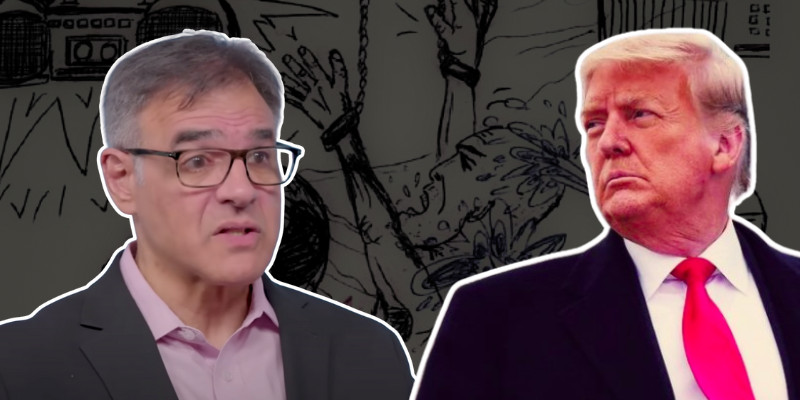

“Does President Trump know about this?” Is the question Joe Rogan asked John Kiriakou—the only CIA officer jailed in connection with the Bush-era “enhanced interrogation” program—after he explained the deep injustices committed against him.
Kiriakou never tortured anyone. Kiriakou did not deprive anyone of sleep, he did not dump cold buckets of water on people who had not faced trial, he did not act out a single method of torture. He only blew the whistle on these acts, and President Trump should issue him a full pardon.
Kiriakou served in the CIA from 1990 to 2004, having risen through the ranks in his field of counterterrorism. He’s been in the public eye since he was released from prison, having recently appeared on the aforementioned Joe Rogan Experience and the Tucker Carlson Show. In December 2007, he appeared on ABC News as the first government official to confirm that the CIA used the depraved method of waterboarding, and called it what it is: torture. Importantly, these methods are known as ineffective.
In 2012, Kiriakou pled guilty to violating the Intelligence Identities Protection Act by disclosing the identity of a covert CIA officer to a journalist—though this journalist’s name was not published at the time. In January 2013, he was sentenced to 30 months in prison, though the feds had initially aimed at giving him 45 years. He would ultimately serve 23 months, plus home confinement. He was told by the judge in the case that she would have imposed a stiffer sentence if she had the discretion.
The list of whistleblowers who have been pardoned is basically non-existent. Chelsea Manning’s sentence was commuted after seven years. Daniel Ellsberg, who leaked the Pentagon Papers in 1971, had charges against him dropped. No major intelligence-community whistleblower has ever been pardoned in US history. So why should Kiriakou be the first? Why is it the correct move?
First: moral symmetry and fairness. The Senate Intelligence Committee’s 2014 report concluded that the CIA’s enhanced interrogation techniques were brutal, deceptive, and ineffective. Many who oversaw or implemented the torture program have never been held accountable, while Kiriakou was punished for speaking about it. By pardoning Kiriakou, Trump would correct an injustice: punishing whistleblowers while excusing those who sanctioned or carried out torture.
Second: Legacy. Trump has voiced on several occasions that he wants to leave an impacting legacy. He has also made himself out to be someone who is a disruptor of permanent Washington, “the swamp,” the deep state, and Kafka-esque bureaucratic orthodoxy. A pardon would send a strong message that loyalty to truth and to Americans’ constitutional ideals can transcend institutional pressure.
Third: political opportunity. A pardon of Kiriakou appeals to multiple factions: national security hawks who regret the overreach of the surveillance/torture state, civil libertarians who value transparency, and populists seeking checks on the intelligence bureaucracy. Of course, opponents will cry “reckless leak” or “endangering sources.” But the core of Kiriakou’s transgression was already restrained: the name he revealed wasn’t published, and the disclosure was part of public debate about torture.
If government agents cannot call out abuses for fear of permanent ruin, institutional rot grows unchecked.
A pardon would not erase the importance of classified confidentiality, nor would it absolve the government’s need to safeguard legitimate secrets. But it would restore balance by recognizing that in rare cases, exposing wrongdoing even within the shadows serves the public interest.
President Trump has already issued broad and controversial pardons. Using that power for John Kiriakou would be a bold, unifying act, opposed by basically no one. Kiriakou revealed that he has received a statement from the CIA and Director of National Intelligence Tulsi Gabbard that they both do not oppose a pardon for him. If Trump has any real interest in reining in the intelligence state and building his legacy, a pardon for Kiriakou is a fitting, overdue move.
Kiriakou never tortured anyone. Kiriakou did not deprive anyone of sleep, he did not dump cold buckets of water on people who had not faced trial, he did not act out a single method of torture. He only blew the whistle on these acts, and President Trump should issue him a full pardon.
Kiriakou served in the CIA from 1990 to 2004, having risen through the ranks in his field of counterterrorism. He’s been in the public eye since he was released from prison, having recently appeared on the aforementioned Joe Rogan Experience and the Tucker Carlson Show. In December 2007, he appeared on ABC News as the first government official to confirm that the CIA used the depraved method of waterboarding, and called it what it is: torture. Importantly, these methods are known as ineffective.
In 2012, Kiriakou pled guilty to violating the Intelligence Identities Protection Act by disclosing the identity of a covert CIA officer to a journalist—though this journalist’s name was not published at the time. In January 2013, he was sentenced to 30 months in prison, though the feds had initially aimed at giving him 45 years. He would ultimately serve 23 months, plus home confinement. He was told by the judge in the case that she would have imposed a stiffer sentence if she had the discretion.
The list of whistleblowers who have been pardoned is basically non-existent. Chelsea Manning’s sentence was commuted after seven years. Daniel Ellsberg, who leaked the Pentagon Papers in 1971, had charges against him dropped. No major intelligence-community whistleblower has ever been pardoned in US history. So why should Kiriakou be the first? Why is it the correct move?
First: moral symmetry and fairness. The Senate Intelligence Committee’s 2014 report concluded that the CIA’s enhanced interrogation techniques were brutal, deceptive, and ineffective. Many who oversaw or implemented the torture program have never been held accountable, while Kiriakou was punished for speaking about it. By pardoning Kiriakou, Trump would correct an injustice: punishing whistleblowers while excusing those who sanctioned or carried out torture.
Second: Legacy. Trump has voiced on several occasions that he wants to leave an impacting legacy. He has also made himself out to be someone who is a disruptor of permanent Washington, “the swamp,” the deep state, and Kafka-esque bureaucratic orthodoxy. A pardon would send a strong message that loyalty to truth and to Americans’ constitutional ideals can transcend institutional pressure.
Third: political opportunity. A pardon of Kiriakou appeals to multiple factions: national security hawks who regret the overreach of the surveillance/torture state, civil libertarians who value transparency, and populists seeking checks on the intelligence bureaucracy. Of course, opponents will cry “reckless leak” or “endangering sources.” But the core of Kiriakou’s transgression was already restrained: the name he revealed wasn’t published, and the disclosure was part of public debate about torture.
If government agents cannot call out abuses for fear of permanent ruin, institutional rot grows unchecked.
A pardon would not erase the importance of classified confidentiality, nor would it absolve the government’s need to safeguard legitimate secrets. But it would restore balance by recognizing that in rare cases, exposing wrongdoing even within the shadows serves the public interest.
President Trump has already issued broad and controversial pardons. Using that power for John Kiriakou would be a bold, unifying act, opposed by basically no one. Kiriakou revealed that he has received a statement from the CIA and Director of National Intelligence Tulsi Gabbard that they both do not oppose a pardon for him. If Trump has any real interest in reining in the intelligence state and building his legacy, a pardon for Kiriakou is a fitting, overdue move.