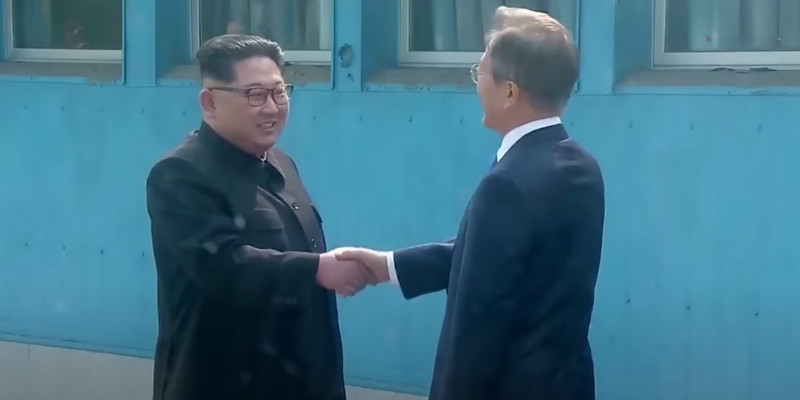

South Korea’s military says North Korea has started removing some of its loudspeakers from the Korean border, just days after Seoul took down its own equipment used for anti-Pyongyang broadcasts.
The Joint Chiefs of Staff confirmed Saturday that the dismantling was observed at certain sites but did not reveal specific locations or confirm whether all the speakers would be removed.
The move comes after the South began pulling down its front-line loudspeakers on Monday, part of President Lee Jae Myung’s first steps toward reducing tensions since taking office in June.
North Korea has not publicly confirmed the removal. In recent months, residents in South Korean border towns have reported hearing sounds such as howling animals and pounding gongs from the North’s speakers—a response to the South’s previous propaganda broadcasts. Those broadcasts, which included K-pop music and criticism of Pyongyang’s leadership, stopped in June when Lee ordered their suspension.
The loudspeaker exchanges have been a longstanding element of Cold War-style psychological warfare between the two countries. South Korea’s prior conservative administration had resumed daily propaganda transmissions last summer after North Korea sent balloons carrying trash into the South.
Pyongyang is known to be highly sensitive to criticism of its ruling family, led by Kim Jong Un, and has sought to limit the influence of South Korean pop culture. Lee has signaled he wants to improve ties, contrasting with the hard-line approach of ousted president Yoon Suk Yeol, according to the Associated Press.
North Korean leader Kim’s sister, Kim Yo Jong, rejected outreach from Seoul in late July, accusing Lee’s administration of relying too heavily on its alliance with the United States. She later dismissed US diplomatic efforts on denuclearization, pointing instead to Pyongyang’s deepening ties with Russia amid the war in Ukraine.
The current thaw could be short-lived. South Korea and the United States are scheduled to begin large-scale joint military exercises on August 18. North Korea has long labeled such drills as invasion rehearsals and frequently uses them as justification for weapons tests and other military actions.
The Joint Chiefs of Staff confirmed Saturday that the dismantling was observed at certain sites but did not reveal specific locations or confirm whether all the speakers would be removed.
The move comes after the South began pulling down its front-line loudspeakers on Monday, part of President Lee Jae Myung’s first steps toward reducing tensions since taking office in June.
North Korea has not publicly confirmed the removal. In recent months, residents in South Korean border towns have reported hearing sounds such as howling animals and pounding gongs from the North’s speakers—a response to the South’s previous propaganda broadcasts. Those broadcasts, which included K-pop music and criticism of Pyongyang’s leadership, stopped in June when Lee ordered their suspension.
The loudspeaker exchanges have been a longstanding element of Cold War-style psychological warfare between the two countries. South Korea’s prior conservative administration had resumed daily propaganda transmissions last summer after North Korea sent balloons carrying trash into the South.
Pyongyang is known to be highly sensitive to criticism of its ruling family, led by Kim Jong Un, and has sought to limit the influence of South Korean pop culture. Lee has signaled he wants to improve ties, contrasting with the hard-line approach of ousted president Yoon Suk Yeol, according to the Associated Press.
North Korean leader Kim’s sister, Kim Yo Jong, rejected outreach from Seoul in late July, accusing Lee’s administration of relying too heavily on its alliance with the United States. She later dismissed US diplomatic efforts on denuclearization, pointing instead to Pyongyang’s deepening ties with Russia amid the war in Ukraine.
The current thaw could be short-lived. South Korea and the United States are scheduled to begin large-scale joint military exercises on August 18. North Korea has long labeled such drills as invasion rehearsals and frequently uses them as justification for weapons tests and other military actions.