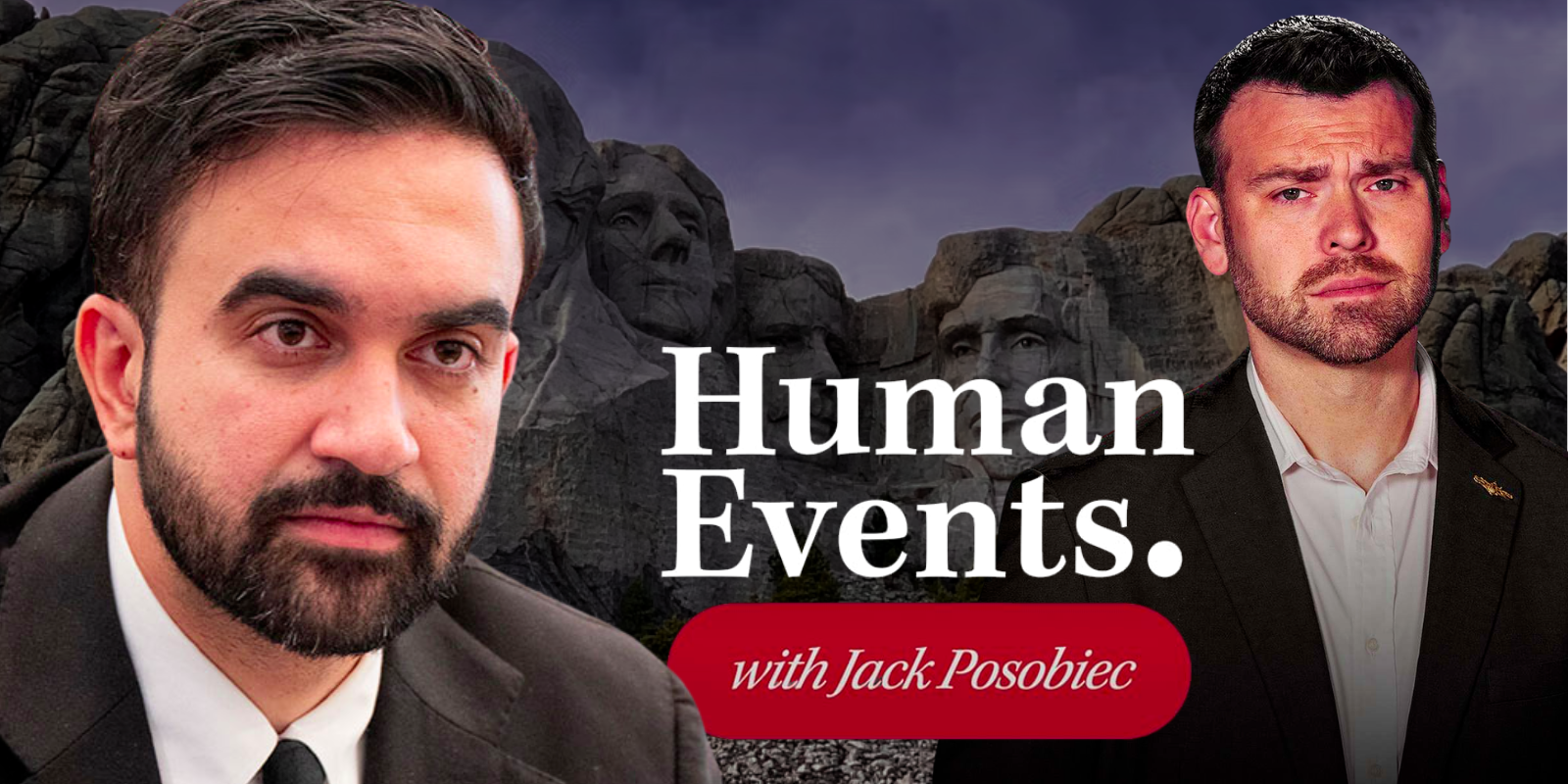
On Tuesday’s edition of Human Events Daily, host Jack Posobiec issued a direct challenge to the Trump admin and lawmakers: tariff remote workers and foreign-based service providers the same way imported goods are taxed.
Responding to the announcement by President Donald Trump about trade with India and new tariffs on the Asian country, Posobiec launched into a wide-ranging monologue condemning the economic damage caused by outsourcing and the decades-long failure to address it.
"I saw this tariff tweet from President Trump earlier today on India, and it really got me thinking," Posobiec said. "I dug into something. Do you realize that outsourcing is not tariffed? I didn't realize that. The tariffs cover the goods that come from other countries, but not the services that come from other countries."
Calling the omission “unbelievable,” Posobiec said that America must immediately move to close the loophole. “Tariff the remote workers. All outsourcing should be tariffed. Countries must pay for the privilege of providing services remotely to the United States, the same way as goods.”
He continued: “This would apply across all industries, and then you lever it as necessary per country.”
Posobiec pointed to cratering job participation among young American men as one of the starkest consequences of this blind spot in trade policy. “Go and look at the unemployment rate for males under 30, especially those 16 to 24. It has nosedived since 2000. In 2000, it was 62 percent. 2022, 43 percent. And all of this while outsourcing increases and outsourcing firms advertise remote services for less than half the costs.”
“It’s really simple,” he said. “Tariff remote workers now. If there’s AI, cloud servers, bot work — whatever it is, whatever it is that’s being hosted overseas — tariff all of these services.”
The host blasted the idea that US companies should be allowed to cut costs by hiring foreign workers without facing penalties, even while Americans go unemployed. “It’s ridiculous to me to think that when we're in a situation where there's an American who could do that job, and a company wants to go and make a deal with a foreign country… whether it be call centers, whether it be IT, so many other features of this… and there’s no tariff? I looked this up. They are excluded from tariffs.”
While some have speculated that such services might be covered under existing rules, Posobiec said it’s time to make it explicit — and mandatory. “We need to tariff the remote workers.”
He acknowledged that opposition would come from both big and small businesses alike. “There are billions and billions of dollars on the line when people say, ‘Oh, wait a minute, but you're going to hurt my small business… you're going to hurt my big business.’ No, no, we're done with it. We're done with all of it.”
“If these countries want to operate and have access to the US market—because the United States is an exclusive market, a luxury market, a premium market—if you want access to that for your goods or your services, I don’t care if it’s Europe, I don’t care if it’s Asia, I don’t care if it’s Southeast Asia, India, wherever… tariff them all.”
He called on his audience to take action and pressure Congress directly: “Go push your senators. Go push your congressmen.”
Posobiec also reiterated his longstanding call for a 100% tax on remittances—money sent out of the US to foreign countries. “Remember, we were going to get remittance taxes as well, which of course, remittances should be taxed at 100% rate. There's no question about that.”
"I’m sick and tired of people treating our country like an economic zone, like it's an economic extraction zone, where the only point of the United States is for people to come,” he said. “These are all economic migrants that are coming here… and the economic extraction that's going on by these corporations, the multinationals, and of course, the remote work countries, these hubs themselves. It’s sick.”
“I’m sorry to the Tom Friedman, ‘Oh, the world is flat.’ No, no, it is not. We do not live in a global economy.”
“I live in the United States of America. That is my country. That is my home.”
“And I’m sick and tired of all of these people extracting from it and treating it like it is some sort of plaything. No. This is our home. And it will be defended — militarily, through law enforcement, and of course, economically. No more hard times for the people of the United States.”
Responding to the announcement by President Donald Trump about trade with India and new tariffs on the Asian country, Posobiec launched into a wide-ranging monologue condemning the economic damage caused by outsourcing and the decades-long failure to address it.
"I saw this tariff tweet from President Trump earlier today on India, and it really got me thinking," Posobiec said. "I dug into something. Do you realize that outsourcing is not tariffed? I didn't realize that. The tariffs cover the goods that come from other countries, but not the services that come from other countries."
Calling the omission “unbelievable,” Posobiec said that America must immediately move to close the loophole. “Tariff the remote workers. All outsourcing should be tariffed. Countries must pay for the privilege of providing services remotely to the United States, the same way as goods.”
He continued: “This would apply across all industries, and then you lever it as necessary per country.”
Posobiec pointed to cratering job participation among young American men as one of the starkest consequences of this blind spot in trade policy. “Go and look at the unemployment rate for males under 30, especially those 16 to 24. It has nosedived since 2000. In 2000, it was 62 percent. 2022, 43 percent. And all of this while outsourcing increases and outsourcing firms advertise remote services for less than half the costs.”
“It’s really simple,” he said. “Tariff remote workers now. If there’s AI, cloud servers, bot work — whatever it is, whatever it is that’s being hosted overseas — tariff all of these services.”
The host blasted the idea that US companies should be allowed to cut costs by hiring foreign workers without facing penalties, even while Americans go unemployed. “It’s ridiculous to me to think that when we're in a situation where there's an American who could do that job, and a company wants to go and make a deal with a foreign country… whether it be call centers, whether it be IT, so many other features of this… and there’s no tariff? I looked this up. They are excluded from tariffs.”
While some have speculated that such services might be covered under existing rules, Posobiec said it’s time to make it explicit — and mandatory. “We need to tariff the remote workers.”
He acknowledged that opposition would come from both big and small businesses alike. “There are billions and billions of dollars on the line when people say, ‘Oh, wait a minute, but you're going to hurt my small business… you're going to hurt my big business.’ No, no, we're done with it. We're done with all of it.”
“If these countries want to operate and have access to the US market—because the United States is an exclusive market, a luxury market, a premium market—if you want access to that for your goods or your services, I don’t care if it’s Europe, I don’t care if it’s Asia, I don’t care if it’s Southeast Asia, India, wherever… tariff them all.”
He called on his audience to take action and pressure Congress directly: “Go push your senators. Go push your congressmen.”
Posobiec also reiterated his longstanding call for a 100% tax on remittances—money sent out of the US to foreign countries. “Remember, we were going to get remittance taxes as well, which of course, remittances should be taxed at 100% rate. There's no question about that.”
"I’m sick and tired of people treating our country like an economic zone, like it's an economic extraction zone, where the only point of the United States is for people to come,” he said. “These are all economic migrants that are coming here… and the economic extraction that's going on by these corporations, the multinationals, and of course, the remote work countries, these hubs themselves. It’s sick.”
“I’m sorry to the Tom Friedman, ‘Oh, the world is flat.’ No, no, it is not. We do not live in a global economy.”
“I live in the United States of America. That is my country. That is my home.”
“And I’m sick and tired of all of these people extracting from it and treating it like it is some sort of plaything. No. This is our home. And it will be defended — militarily, through law enforcement, and of course, economically. No more hard times for the people of the United States.”