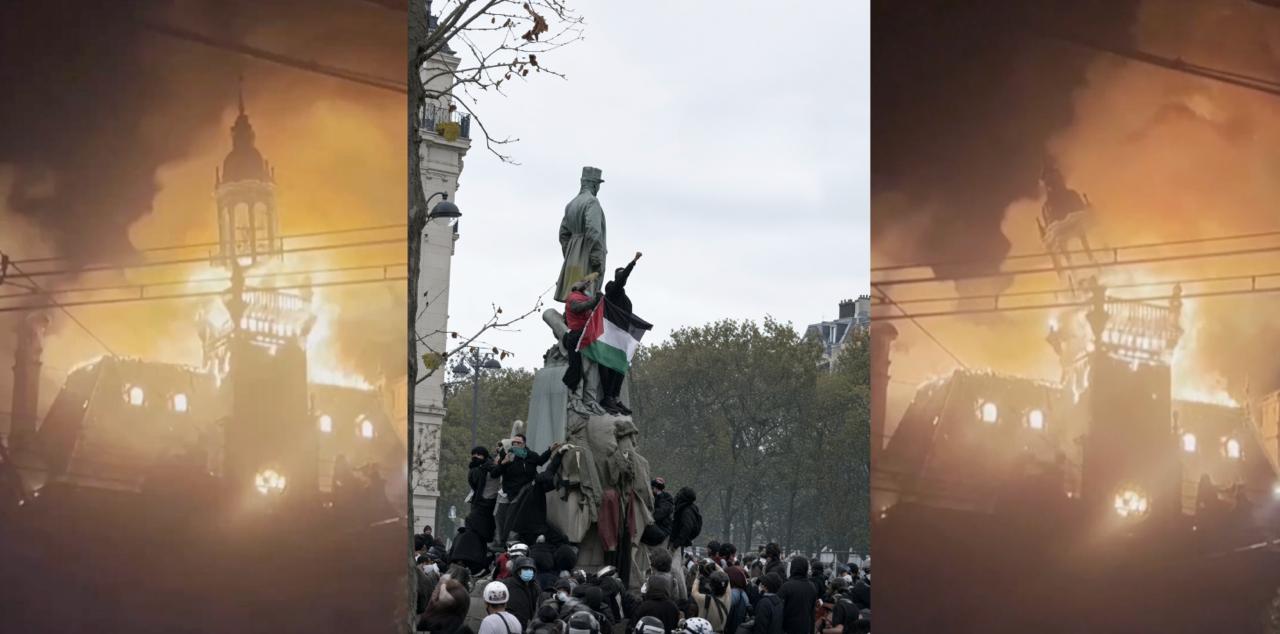

El Salvador’s President Nayib Bukele issued a warning to Western nations on Monday, urging them to confront the unraveling of societal order taking place in cities everywhere. Bukele contrasted El Salvador’s current stability under his regime with the unrest he sees developing across wealthier countries.
“To Western nations: You can’t build, or even fix, anything on top of societal disorder,” Bukele wrote. “Take traffic, for example. The most logical solution is public transport. But without order, anyone who can afford a car will avoid it, simply because they don’t feel safe using it.
"In El Salvador, we lack a lot of things, but we have achieved societal order. You, on the other hand, have almost everything, but you're quickly losing your societal order. You can now predict where things are heading in the near future. There’s still time to save your nations, but not much.”
His words come on the heels of new polling showing his continued popularity among Salvadorans. A recent survey conducted by LPG Datos, affiliated with La Prensa Gráfica, gave Bukele an approval rating of 85.2 percent.
This marks a drop from 91 percent in 2023, but he remains one of the most popular heads of state in the Americas—despite ruling beyond the single term permitted by El Salvador’s Constitution.
Now entering his seventh year in office, Bukele has maintained public support by aggressively cracking down on criminal gangs and overseeing a dramatic drop in the country’s homicide rate, turning the country seemingly overnight into one of the safest in the world. The same poll indicated growing concern among Salvadorans about the economy, healthcare, and inflation.
Only 1.4 percent cited the concentration of power in the presidency as a pressing issue.
A second poll from CID Gallup, also released in May, echoed the 85 percent approval rating.
Bukele, who has drawn criticism from human rights organizations—or as he would call them, "criminals' rights organizations"—for what they call authoritarian practices,has made no effort to soften his image. “Dictator” is a label he openly mocked in a recent national address.
At CPAC in February, Bukele issued another, similar warning. He criticized American cities like Baltimore, Portland, and New York, where he said “crime and drugs have become the nearly daily norm, and even accepted and promoted by the government.”
“We did the unthinkable to cleanse our society,” Bukele said. “We arrested the terrorists, but we have to remove corrupt judges, and corrupt attorneys, and prosecutors.”
He also took direct aim at billionaire George Soros, saying, “Who elected Soros to dictate public policy and laws? Why does he feel entitled to impose his agenda? Let me tell you something, Soros and his cronies hit a brick wall in El Salvador.”
“Thank God and all the Glory be to Him, Salvadorans are now immune to his influence.”