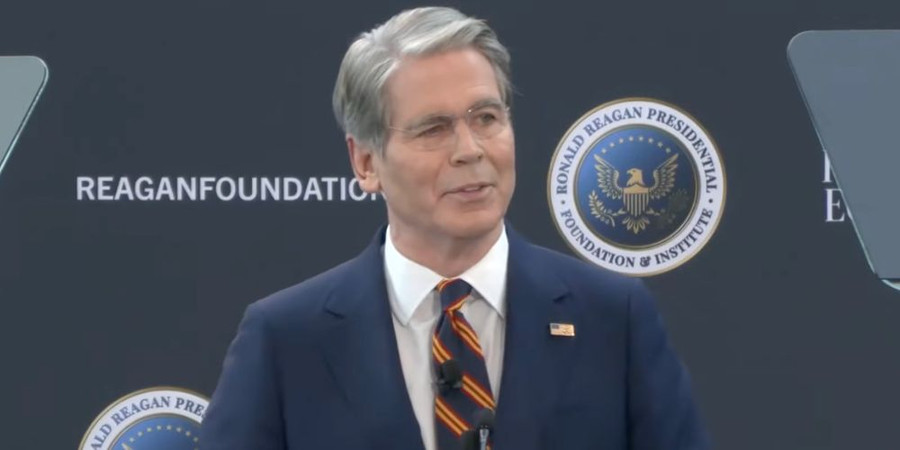
From Martin Anderson:
As the historians dig into Reagan's life and accomplishments and try to figure out how he did all he did they will be forced to examine what he was reading. Where did he get all those facts and figures? Where did he find all those stories about economics and national security and social issues? Was it the New York Times or the Washington Post? Not likely.
I traveled with Reagan in both of his presidential campaigns, was his domestic and economic adviser in his early years in the White House, and observed him closely as he researched and wrote. He did read many books and the major newspapers, but his major sources were two publications - HUMAN EVENTS and National Review. These he read from cover to cover. He seemed to particularly enjoy reading HUMAN EVENTS.
In fact, he liked it so much he would often underline key phrases and sentences, rip out the article and hand it to one of his staff - suggesting we keep it in the file or check further on the points being made.
The reason he depended so much of these two conservative publications was twofold: (1) They covered many news items of keen interest to him that the conventional media did not deem "fit to print," and (2) He could trust what they wrote. It is rarely mentioned, but their journalistic standards were exceptionally high, and I do not recall even one instance when some fact he had gleaned and used in a speech or radio commentary, or in some comment to the press, was found to be not true.
Looking back, these conservative publications were not by themselves sufficient as he drove toward the presidency, but they were essential. Here are a few things about HUMAN EVENTS that Reagan himself wrote:
Letter to Sylvia Kinyoun - Nov. 3, 1983
Letter to Clyde Beane - late 1970s
Radio commentary - March 23, 1977
Radio commentary - Jan. 27, 1978
Letter to Mrs. Frank Seaver (who gave him a subscription)
Letter to Lee Edwards - 1980 presidential campaign
in the Reagan campaigns of '80 and '84,
and from 1981-1982 he served as
domestic policy adviser in the Reagan White House.
He is the author of Revolution,
a book about Reagan's rise to power, and coauthor of
Reagan in His Own Hand and Reagan: a Life in Letters.