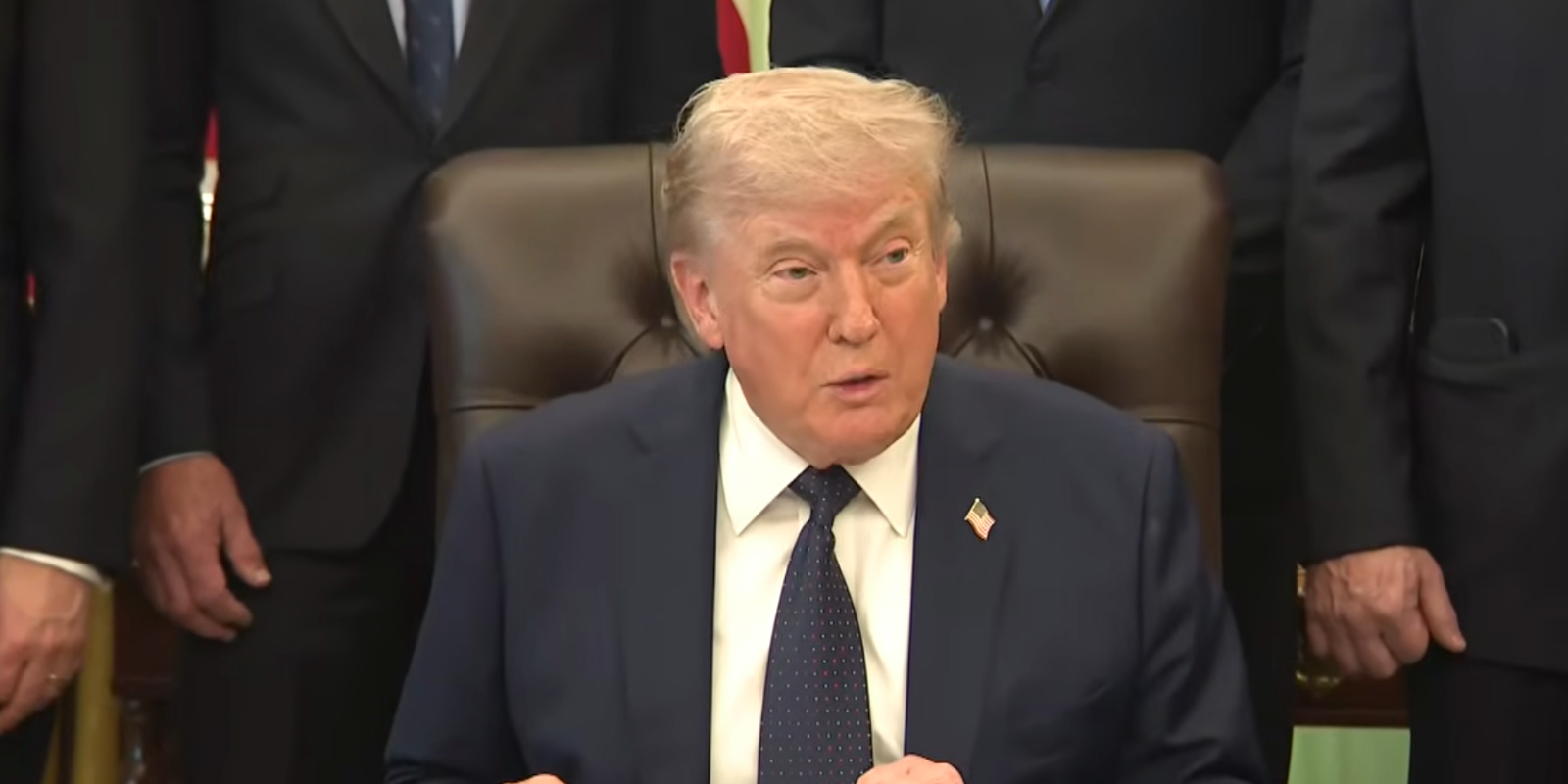
The President:
George W. Bush is riding high, despite problems on the international front.
1) Even more important than Bush’s high national ratings is his popularity in the bluest of the blue Democratic states: California, New York, New Jersey and Minnesota.
2) Things are not going well in Iraq and Afghanistan, and the Saudi Arabia terrorist attacks reflect dangerous regional instability. Nevertheless, there is no discernible political fallout from it.
3) The Palestinian roadmap is in serious trouble thanks to Israeli Prime Minister Ariel Sharon’s opposition, and Bush is being advised not to press the issue.
4) Bush has scored a major victory on the tax bill (see below).
Tax Cuts:
President Bush last week brought together the top House and Senate negotiators on the tax cut, and hammered out a deal that makes passage of a tax cut likely, with Bush insisting on action before Memorial Day.
1) Making the task difficult was the handful of competing "musts" from different corners. For the White House, complete elimination of the double-taxation of dividends was required for the sake of fundamental fairness. For the Senate, limiting the tax cut portion of the bill to $350 billion over ten years was necessary to win the support of moderates. House Republicans, for their part, said they would reject tax increases. The deal meets all those demands.
2) The White House rejected the idea, floated by Ways and Means Chairman Bill Thomas (R.-Calif.), of "ping-pong" with the Senate. This idea, where the two chambers would pass one another’s bills after amendments, would have the negotiations occur outside of conference. Bush said that was too slow a process and demanded immediate negotiations.
3) The administration joined the House in rejecting the Senate provision eliminating the foreign income exclusion. This "offset" or "pay-for" (tax increase) would generate an additional $35 billion in revenue.
4) The most contentious issue was dividend taxation. In a creative maneuver, tax writers have come up with a plan combining the House and Senate treatment of stock income. The Senate elimination of taxation on dividend income will be included, but will sunset to keep down "costs." The House’s "5-15" plan, setting two new lower rates for taxes on capital gains, will also be included on top of the temporary elimination of dividend tax.
5) The tax-cut portion of the bill will total $350 billion over ten years, and aid to states will be added on top. It is not clear whether it meets the demands of Sen. George Voinovich (R.-Ohio), but it may satisfy Sen. Olympia Snowe (R.-Maine.). Senators John Breaux (D.-La.), Evan Bayh (D.-Ind.), and Ben Nelson (D.-Neb.) would be question marks. Assuming the loss of Sens. John McCain (R.-Ariz.) and Lincoln Chafee (R.-R.I.) and the support of Sen. Zell Miller (D.-Ga.), Republicans would need just two of Voinovich, Snowe, Breaux, Bayh or Nelson to get to 50 votes.
Judges:
Senate Republicans have regrouped and begun a slow, difficult march towards winning confirmation of Bush’s judicial nominees.
1) The first stage in the confirmation fight from here out is to win the complete support of all 51 Republicans for getting Bush’s judges on the court. Currently, some liberals are less than enthusiastic about going all out for the nominees, and some other senators are reluctant to take drastic steps. Leadership hopes to show that the Democrats have already created a state of war, and unprecedented steps are necessary. Sen. Arlen Specter (R.-Pa.) is one of the reluctant Republicans.
2) This first stage involves increasing the queue of nominees. Currently, D.C. lawyer Miguel Estrada and Texas Supreme Court Justice Priscilla Owen are caught up in the filibuster backlog. Los Angeles Superior Court Judge Carolyn Kuhl, nominated to the 9th Circuit Court of Appeals, appears to be the next target and others after her.
3) Also, leadership has begun to lay the groundwork for the second aspect of the effort- overcoming the filibuster. The proposal by Sen. Miller to institute declining filibuster thresholds for subsequent cloture motions on nominees is the least ambitious idea.
4) Some GOP senators are calling for the "nuclear option": ruling that the 60-vote roadblock for cloture on a judge is unconstitutional or out of order. This would come as a ruling from the chair, and would require 51 votes to uphold. Currently, there are not 51 votes for this.
5) As a variation to this, Republicans may try to pass a rule change (such as instituting the Miller proposal), and have the chair rule the 66-vote requirement for rules changes unconstitutional.
6) The sense of urgency on this topic was heightened this week by the Time magazine article on the likelihood of Supreme Court vacancies this summer.