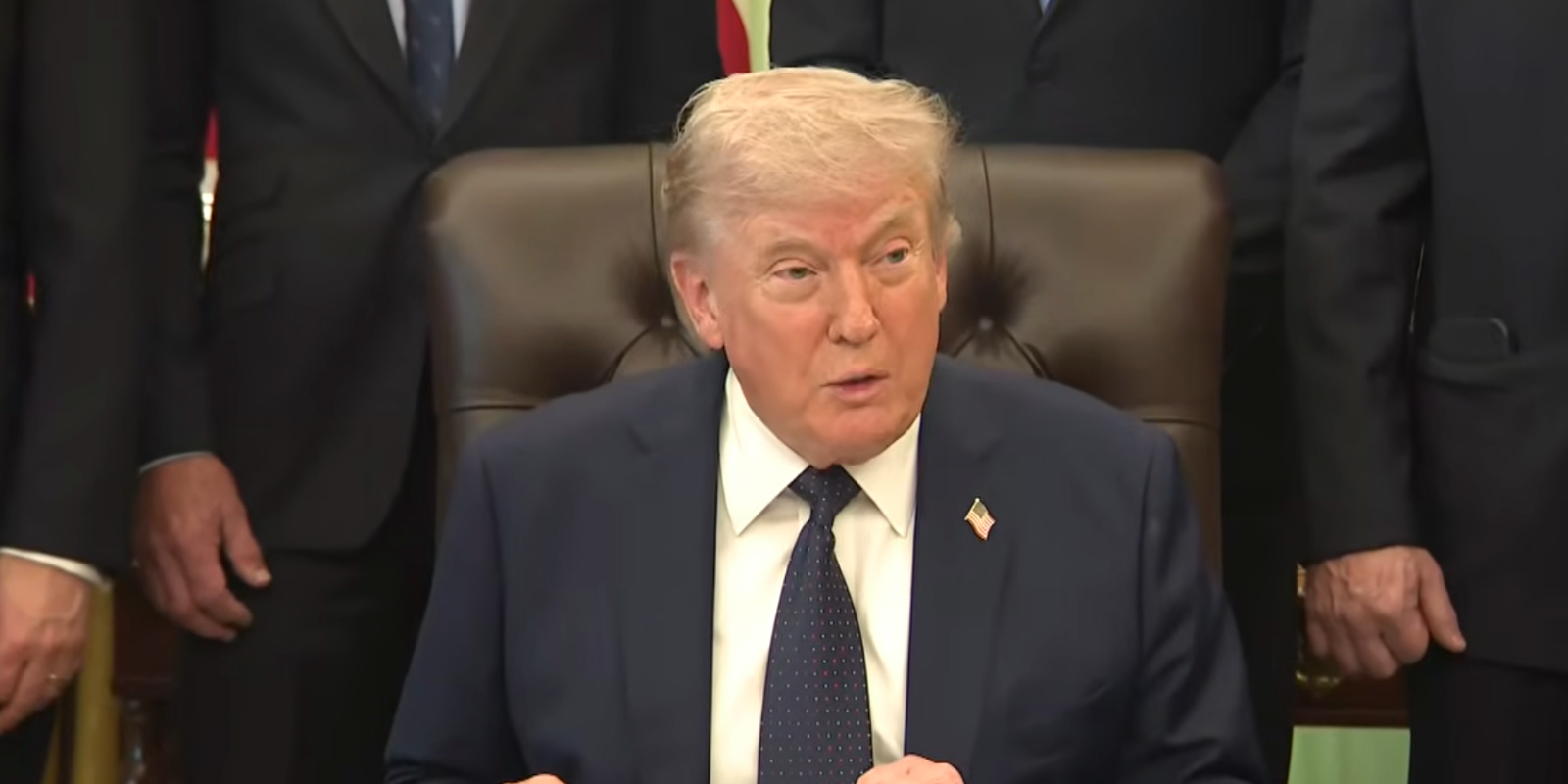
The President:
The political popularity of President George W. Bush is at its peak, but with limitations.
1) It is difficult to describe the despair of Democrats when they witnessed the President in a pilot’s jump suit, landing aboard the U.S.S. Abraham Lincoln and addressing the sailors there.
2) The President’s postwar approval rating of 71% is far below his father’s 90% following Gulf War I, but he is much more engaged politically and much more attuned to economic perils.
3) The danger for Bush is less failing to get his tax cut than an economic collapse. The prospects: Unlikely but not entirely impossible.
Tax Cut:
While the landscape is constantly changing, there currently appear to be two roads lying before Republicans trying to push through the tax cut.
1) Ways & Means Chairman Bill Thomas (R.-Calif.) laid out a plan that would not eliminate the double taxation of dividends, but cut taxes on dividend income while also lowering capital gains rates.
2) Meanwhile, the White House is still pushing complete elimination of dividend taxation, hoping it can win over some Democratic votes.
3) The Thomas plan was welcomed by many on Capitol Hill as the saving stroke for a "growth package." Former Bush advisor Lawrence Lindsey praised the plan as "elegant," and the House leadership was enthusiastic.
4) It would have the same stimulative effect on the stock market as elimination of dividend taxation-possibly even more-while reducing federal revenue less. Thomas’s "5-15" package (those would be the two rates for taxing stock income), would "cost" only $295 billion over the next decade. While the current Ways and Means bill would draw down $550 billion in federal revenue in keeping with the House’s Budget Resolution figures, the investment incentives could be grouped with one or two other less-"expensive" provisions and pared down to $350 billion.
5) But Senate Majority Leader Bill Frist (R.-Tenn.) still echoes the White House line that double-taxation of dividends must be ended. There are two ways to do this:
6) The first, which the White House would like to see, involves winning the support of enough potentially persuadable Democrats to bust through the $350 billion limit. The White House would need to win over two Democrats, in addition to Sen. Zell Miller (D.-Ga.). But right now only Sen. Ben Nelson (D.-Neb.) has shown any interest at all in joining Miller in breaking the $350-billion limit.
7) The second way, preferred by Frist-who promised his party’s fiscal liberals he would not exceed $350 billion in breaks over ten years-would be to lower the revenue impact of the elimination by phasing it in over the decade.
8) Republicans still may consider trying to pass more popular measures outside the Budget reconciliation process. Tax breaks, such as acceleration of the child tax credit increase and marriage penalty relief, could garner the 60 Senate votes needed to break a filibuster.
Trade Policy:
President Bush appears in a lose-lose situation over steel policy, but progress is seen on export-subsidy dispute with the European Union.
1) While U.S. steel imports remain steady, there is unease on both sides of the dispute over the future of the steel tariffs Bush imposed last spring. Since the President last year imposed three years of tariffs on imported steel, the administration has granted thousands of exemptions.
2) Bush last week disregarded the advice of the U.S. International Trade Commission and refused to impose tariffs on wire coat hangers made in China. Bush argued that such tariffs would harm family-owned businesses, such as dry-cleaners, that use high quantities of the coat hangers.
3) Steel makers continue to object that exemptions and similar rulings allowing steel to come into the country subvert the tariff’s ability to protect the U.S.’s ailing steel industry. Companies that use steel, such as automobile makers and auto-parts makers, say that the tariffs are devastating them by raising costs. Just last week in the Midwest region, a steel maker and a truck frame maker both closed down, attributing their respective failures to Bush’s steel policy.
4) It is unlikely Bush will take any drastic steps to alter the direction of his steel policy. Bush imposed the tariffs in the face of anger from labor unions and executives in the steel industry.
5) Representatives Phil Crane (R.-Ill.) and Charlie Rangel (D.-N.Y.), two senior members of the Ways and Means Committee, proposed a bill to fix what the World Trade Organization (WTO) has ruled to be an export subsidy. The Crane-Rangel measure would provide tax breaks to all U.S. manufacturers-exporters or not-proportional to how much of their manufacturing occurs in the U.S.