
UK Minister Keir Starmer said the United Kingdom will not be pulled into a wider Middle East war even as discussions continue with allies about protecting shipping routes in the region.
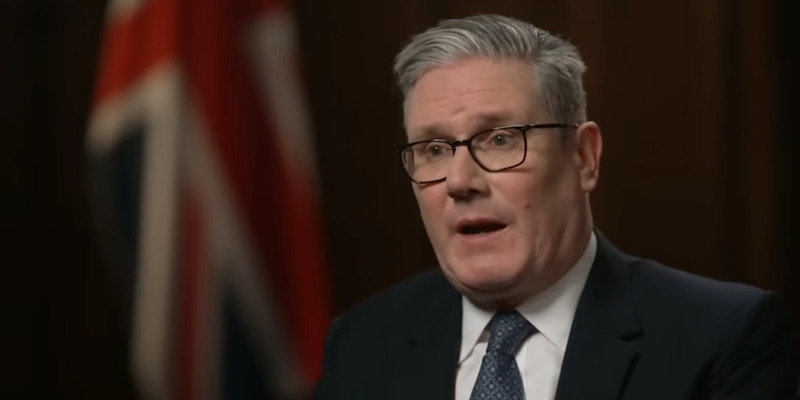
Speaking at a Downing Street press conference, Starmer said the government is reviewing options after Donald Trump called on allied nations such as those in NATO to deploy naval forces to the Strait of Hormuz to maintain global oil shipments. The waterway is one of the world’s most important routes for energy exports.
Starmer said the UK is considering whether to contribute ships and mine-hunting drones as part of an effort with allied countries to reopen shipping lanes. The prime minister acknowledged the decision is complicated, saying the government is still weighing its next move.
“It’s a discussion; we’re not at the point of decisions yet. It’s obviously a difficult question, that goes without saying, in relation to how you safeguard maritime traffic … But we are discussing that with the US, with Gulf partners and with Europeans,” he said.
The comments come after Trump warned NATO members could face consequences if they refuse to support Washington’s efforts to secure the waterway.
Starmer said Britain would not expand its role in the conflict beyond protecting its interests and those of its allies.
"While taking the necessary action to defend ourselves and our allies, we will not be drawn into the wider war. We will keep working towards a swift resolution that brings security and stability back to the region and stop the Iranian threat to its neighbours,” he said.
He added that the conflict must end quickly to prevent further economic pressure on households.
“I want to see an end to this war as quickly as possible, because the longer it goes on, the more dangerous the situation becomes, and the worse it is for the cost of living back here at home.”
The prime minister also warned that rising tensions in the Gulf could benefit Moscow. “We cannot allow the war in the Gulf to turn into a windfall for Putin. Now it’s clear the US operation has massively weakened the military capability of the abhorrent regime in Iran. The question is, what comes next?”
Starmer said he had spoken with Trump on Sunday evening and stressed that any long-term resolution would require negotiations.
He also defended his earlier decision not to participate in the initial US offensive, saying it was based on principle. “Principles, which I believe are shared by the British people, that our decision should be based on a calm, level-headed assessment of the British national interest.”
As the UK deals with the war's fallout the UK government announced £53 million in support for households that rely on heating oil after energy costs surged following the outbreak of fighting involving Iran.
Speaking at a Downing Street press conference, Starmer said the government is reviewing options after Donald Trump called on allied nations such as those in NATO to deploy naval forces to the Strait of Hormuz to maintain global oil shipments. The waterway is one of the world’s most important routes for energy exports.
Starmer said the UK is considering whether to contribute ships and mine-hunting drones as part of an effort with allied countries to reopen shipping lanes. The prime minister acknowledged the decision is complicated, saying the government is still weighing its next move.
“It’s a discussion; we’re not at the point of decisions yet. It’s obviously a difficult question, that goes without saying, in relation to how you safeguard maritime traffic … But we are discussing that with the US, with Gulf partners and with Europeans,” he said.
The comments come after Trump warned NATO members could face consequences if they refuse to support Washington’s efforts to secure the waterway.
Starmer said Britain would not expand its role in the conflict beyond protecting its interests and those of its allies.
"While taking the necessary action to defend ourselves and our allies, we will not be drawn into the wider war. We will keep working towards a swift resolution that brings security and stability back to the region and stop the Iranian threat to its neighbours,” he said.
He added that the conflict must end quickly to prevent further economic pressure on households.
“I want to see an end to this war as quickly as possible, because the longer it goes on, the more dangerous the situation becomes, and the worse it is for the cost of living back here at home.”
The prime minister also warned that rising tensions in the Gulf could benefit Moscow. “We cannot allow the war in the Gulf to turn into a windfall for Putin. Now it’s clear the US operation has massively weakened the military capability of the abhorrent regime in Iran. The question is, what comes next?”
Starmer said he had spoken with Trump on Sunday evening and stressed that any long-term resolution would require negotiations.
He also defended his earlier decision not to participate in the initial US offensive, saying it was based on principle. “Principles, which I believe are shared by the British people, that our decision should be based on a calm, level-headed assessment of the British national interest.”
As the UK deals with the war's fallout the UK government announced £53 million in support for households that rely on heating oil after energy costs surged following the outbreak of fighting involving Iran.