LARRY HANCOCK: Should threat warnings for UFOs, UAPs be part of the national security landscape?
If the situation with UFOs or UAPs is indeed as serious as being described in the media, it is something that can only be resolved at the level of the Director of National Security or that of the National Security Council.
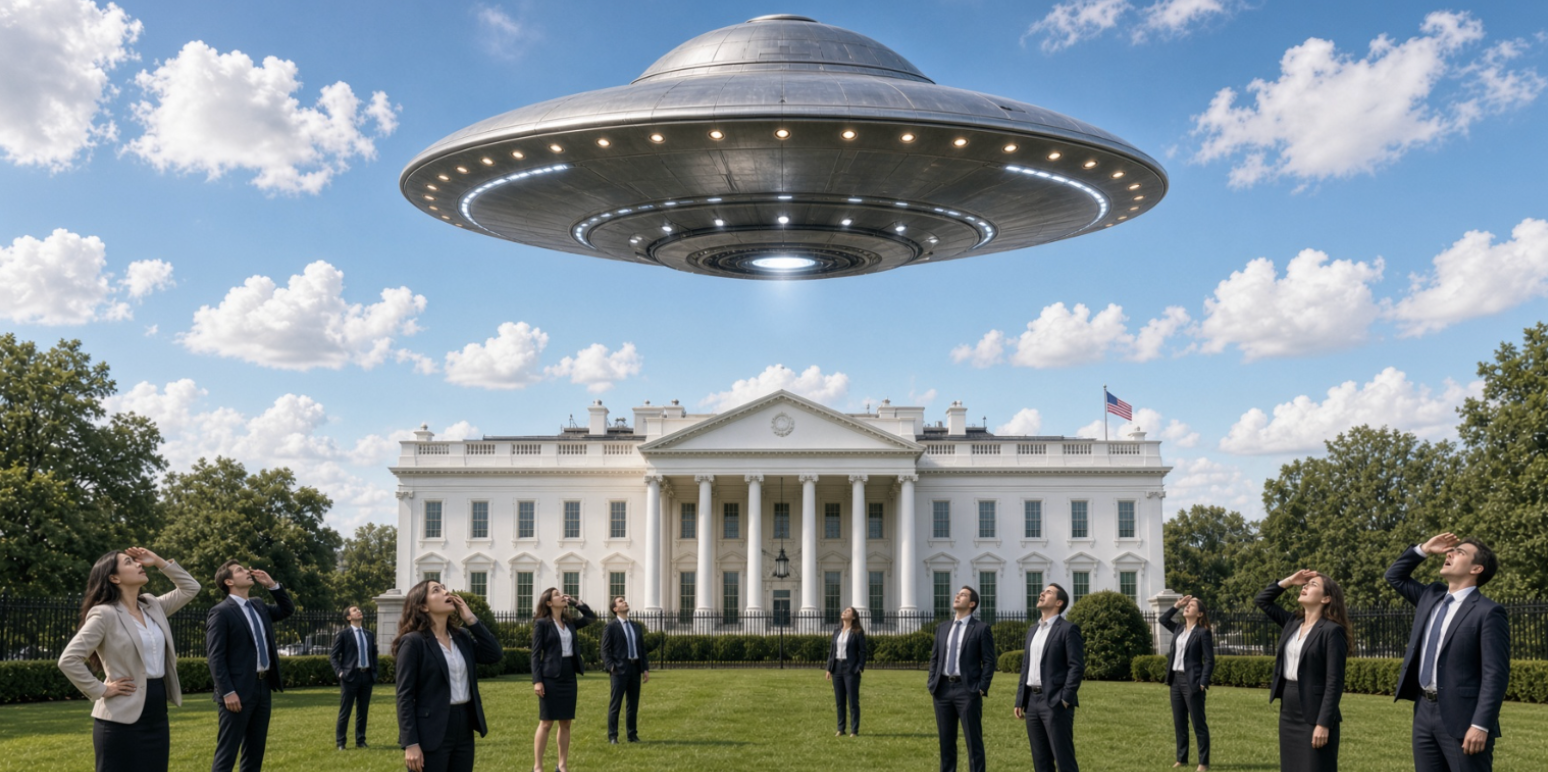
Much of the current discussion and dialogue on the subject of UFOs or UAPs is based on media statements and interviews with senior American intelligence officers such as David Grusch, a former senior intelligence officer at both the National Reconnaissance Office and the National Geospatial-Intelligence Agency (NGA), and Jay Stratton, who served in the Defense Intelligence Agency’s (DIA) Defense Warnings Office, acting as its Chief of Air and Space Warfare.
These individuals strongly assert the view that there is a case for non-human intelligence (NHI) involved with some percentage of UFO or UAP activity. They also express serious concerns regarding the intentions and possible threat posed by the non-human operators. Their remarks include not only the possibility of an existing threat but also a high-level government cover-up to suppress knowledge of the NHI and their intentions. The concerns expressed by these experienced intelligence officers have added to both the mystery of the unidentified objects but have substantially increased the element of "FUD": the “fear, uncertainty, and doubt” associated with the subject.
But the real question is why there is so much fear, uncertainty, and doubt. The intelligence community, and in particular the military services, holds decades of reports not only from citizens but, more specifically, from within the military services. The Joint Chiefs of Staff have issued specific directives about threats related to unknown objects that might pose a national security threat risk; these directives have been in place for decades.
Beyond the first 1947 Air Force intelligence finding that UFOs were real and intelligently operated, we have 30 years and thousands of follow-on reports collected and evaluated by Air Force projects. Beyond that, there is a whole body of operational reports, situation reports, and national security threat reports for more recent years—reports submitted up the military chains of command and to NORAD, the National Military Command Center, and the services’ own intelligence groups during the years after the Air Force ceased collecting and consolidating reports.
We also know who within the intelligence community should be dealing with those reports and any potential threat related to UFOs/UAPs. Within the U.S. National Intelligence Community (IC), the National Intelligence Council oversees threat and warning studies (tasks that require long-term data collection and structured pattern and indications analysis). The NIC itself operated under the actual oversight of the Office of the Director of National Intelligence (ODNI).
Historically, the US had a dedicated group designated for the purpose, known as the Strategic Warning Staff and later the National Intelligence Officer for Warning. Currently, the intelligence community operates under a much more decentralized model, with responsibilities spread across several directorates and military service functions.
The Defense Intelligence Agency (DIA) itself holds the foundational responsibility and takes a leading role in threat and warning studies. If the former chief of the DIA’s own Air and Space Warfare effort is convinced that a potential threat exists—even if it’s simply uncertainly over long-term NHI intentions. The DIA and other elements of the intelligence community have professional resources on call to tackle that question. Professionals trained and skilled in threat and warning studies can build baselines of UFO/UAP activity and assess various threat scenarios. The intelligence community produces lists of topics tasked to those groups every year, as a matter of public record. Yet despite concerns from former senior intelligence officers, neither UFOs nor UAPs have ever appeared in those task listings.
The practices of actual threat and warning intelligence are well established, institutionalized, and proven effective on numerous occasions since the end of World War II. Virtually all major hostile actions against the United States—from the involvement of China in the Korean War to the attacks of September 11 have been preceded by warnings from within the intelligence community.
If the situation with UFOs or UAPs is indeed as serious as being described in the media, it is not a matter for a Congressional oversight committee, or even for the Inspector Generals who deal with whistleblowers. It is something that can only be resolved at the level of the Director of National Security or that of the National Security Council. Threat and warnings intelligence is their job; they should be challenged by the public as to whether professionals have consolidated and carried out threat and warnings intelligence studies on the history of UFO activities around the American military and test facilities, in particular its atomic warfare complex. If the answer is yes, the President should demand they at least produce proof that the work has or will be done—and integrated into national security planning.
Along with that, the legal guarantees for whistleblowers should be extended to whistleblower sources, something not currently in place. At that point, claims of alien bodies, crashed spaceships, and technology sharing with civilian contractors should be investigated by the individual agencies involved in concert with the FBI. Violations of security oaths are a serious legal matter. A serious search should also be carried out for any disinformation, counterintelligence, or project cover programs utilizing UFOs as content; such programs (which are known to have existed, some may still be active) need to be described in detail and made public, as would be the improper use of "disinformation" and the illegal handling of advanced technology from any source.
It's time to get serious and to get real. If there is a legitimate reason for concern, the government agencies charged with national security, with threat and warning intelligence, need to demonstrate they recognize UFOs or UAPs as a legitimate subject—or provide much better justification for why they do not consider it a matter for actual "tasking" given the remarks by their own highly trusted and experienced officers.
Larry Hancock has bachelor’s degrees in history and anthropology, served in the US Air Force as an electronics communications specialist, and worked over thirty years in the computer and communications industry. He has published over a dozen books on Cold War history and national security including Unidentified; The National Security Problem of UFOs. Larry is a board member for the Scientific Coalition for UFO/UAP Studies (SCU). He also serves as the team leader for the SCU Intentions Studies.
Related
More Science and TechnologyMore from Human Events
Browse the latest →