
Protests are erupting in parts of the world over the increase in the price of fuel. Oil hit $100 per barrel last week and while that led to increases in gas prices in the US, it led to protests in Guatemala, Syria, Indonesia, Romania and Portugal. Concerns are growing in other regions as well.
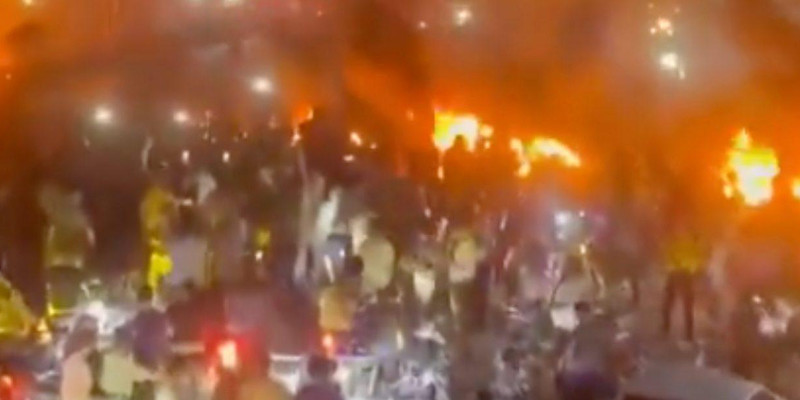
The raise in prices is a direct result of the US and Israel's war against Iran in the Middle East, with the stated purpose of preventing that nation from developing a nuclear weapon. Portugal has seen traffic protests while in Guatemala and Syria, protesters have burned tires. In Indonesia, taxi drivers have protested a a gas rationing system, The New York Times reports.
Portugal saw drivers organizing on social media to form slow traffic protests where they snarl the roads and honk their horns. In one instance, a group of vehicles blocked roads leading to a refinery.
Romanian farmers marched on Bucharest to protest the rising costs and were hit with tear gas by authorities.
In France, upset is brewing and a new protest is being called for October 17.
Costs aren't the only issue, shortages have also been a cause for concern. In Indonesia there have been cooking gas shortages along with rolling blackouts. Students took to the streets to protest but their efforts were quelled "by pro-government organizations," states the Times. Public debt is also a concern.
Bangladesh makes most of its money by making apparel and imports most of its fuel from the Middle East, but the factories are closing as the government rations electricity. Those power outages are up to four or five times per day, a worker told the Times and have led to protests in the street with large marches.
In The Philippines, fishermen are staying home rather that take on the burden of the high cost of diesel while hired drivers have begun to give up work rather than pay excessive gas costs only to not earn it back during their working hours.
The government in Sri Lanka sets the gas prices but because that cost has not increased, gas stations must buy the gas for more than they're permitted to sell it for. This has led those stations to engage in rationing as they wait for the government to catch up. The government is considering both raising prices and offering subsidies.
Workers and activists marched through Guatemala City to demand the government do more to offset costs, such as dispensing with gas taxes. Protesters there have critiqued the wealthy and government, set cars on fire, and taken to the streets in marches.
Syria's new government has raised the cost of gas by 40%, a measure they say is only temporary, but it led to street protests. Rioters blocked traffic, set fires, and causes mayhem in a demand for gas costs to be reduced. The war, said the government, is the cause of the increases.
The raise in prices is a direct result of the US and Israel's war against Iran in the Middle East, with the stated purpose of preventing that nation from developing a nuclear weapon. Portugal has seen traffic protests while in Guatemala and Syria, protesters have burned tires. In Indonesia, taxi drivers have protested a a gas rationing system, The New York Times reports.
Portugal saw drivers organizing on social media to form slow traffic protests where they snarl the roads and honk their horns. In one instance, a group of vehicles blocked roads leading to a refinery.
Romanian farmers marched on Bucharest to protest the rising costs and were hit with tear gas by authorities.
In France, upset is brewing and a new protest is being called for October 17.
Costs aren't the only issue, shortages have also been a cause for concern. In Indonesia there have been cooking gas shortages along with rolling blackouts. Students took to the streets to protest but their efforts were quelled "by pro-government organizations," states the Times. Public debt is also a concern.
Bangladesh makes most of its money by making apparel and imports most of its fuel from the Middle East, but the factories are closing as the government rations electricity. Those power outages are up to four or five times per day, a worker told the Times and have led to protests in the street with large marches.
In The Philippines, fishermen are staying home rather that take on the burden of the high cost of diesel while hired drivers have begun to give up work rather than pay excessive gas costs only to not earn it back during their working hours.
The government in Sri Lanka sets the gas prices but because that cost has not increased, gas stations must buy the gas for more than they're permitted to sell it for. This has led those stations to engage in rationing as they wait for the government to catch up. The government is considering both raising prices and offering subsidies.
Workers and activists marched through Guatemala City to demand the government do more to offset costs, such as dispensing with gas taxes. Protesters there have critiqued the wealthy and government, set cars on fire, and taken to the streets in marches.
Syria's new government has raised the cost of gas by 40%, a measure they say is only temporary, but it led to street protests. Rioters blocked traffic, set fires, and causes mayhem in a demand for gas costs to be reduced. The war, said the government, is the cause of the increases.