
The European Union is about to join Australia and Canada in restricting social media use for minors. The plan will come under a new EU KIDS Act and will enforce age verifications to prevent minors from accessing the platforms and will also cover prohibitions for minors for AI chatbots and companions.
The only way minors will have access to these platforms will be through parental supervision. "Health experts" have been leading the charge to restrict social media use for minors but will require age verification for all users of social media, AI chatbot and companion software, and video-sharing platforms.
Requiring minors to submit age verification to access these platforms is controversial among those who oppose forcing age verification, and therefore identity verification, across the internet. Safeguarding children against social media requires a diminishment of privacy for adults, as well, and will mean that all persons must upload identity documents before using these platforms.
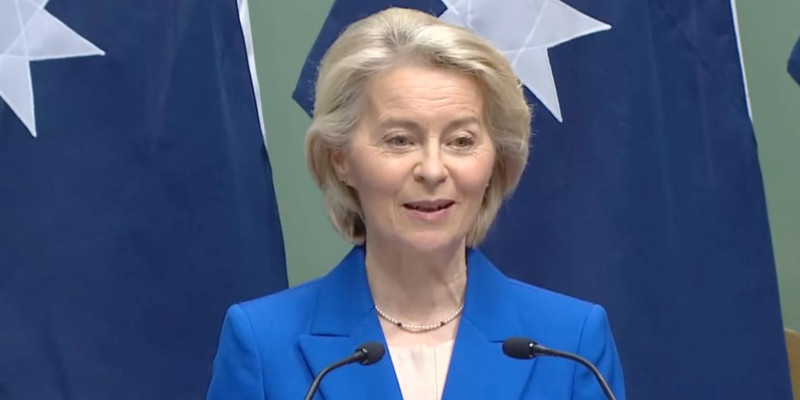
POLITICO, which viewed the documents ahead of the Thursday reveal in the continent's Parliament, states that "the age restrictions are a major step by the European Commission and its President Ursula von der Leyen to better safeguard minors' on social media platforms, amid fierce backlash from health experts, politicians and parents against the effects of platforms like TikTok, Instagram, and others on the mental health of minors."
Von der Leyen is expected to speak about this in a Wednesday State of the European Union Speech and it will likely be welcome to some of national leaders such as France's Emmanuel Macron, who has pushing pushing for such provisions. Other European nations, such as Austria, Denmark, and Spain have been working on their own plans to require age verification to access these platforms.
The EU will restrict and require age verification for social media, POLITICO writes, as well as "video-sharing platforms, online games, and AI chatbots and companions, but would exclude educational tools." There will also be "a series of education measures for kids, parents and guardians," the outlet specified.
Parents will be able to control when their children have access to these platforms and will be able to open accounts for their children under 13, but those accounts will be "fully controlled" by their parents. Those parental controls will continue from ages 13 to 15, though there will be a broadening of access, with "limits on contact with strangers and screen time." It would not be until minors are 15-years-old that they would be able to create accounts on their own, without parental or guardian oversight.
The companies that will be forced to require age verification and to implement these rules will also be made to pay fees to the EU for EU oversight of the new rules. The EU has bene gung-ho about creating restrictions for social media companies and this EU KIDS Act will join other restrictive regulations such as the Digital Services Act and the Artificial Intelligence Act.