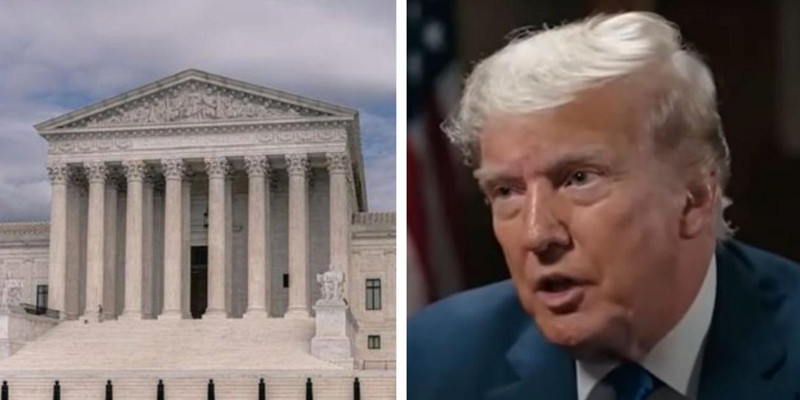

The Supreme Court of the United States ruled today that some of President Donald Trump’s global tariffs are not allowed under the emergency powers law that the administration had been using to enact them. Trump called it a "disgrace."
Chief Justice John Roberts wrote for the 6-3 majority that Trump’s tariffs were not covered in the language of the International Emergency Economic Powers Act passed by Congress in 1977. Trump had invoked that law to impose a series of important tariffs, including reciprocal tariffs on dozens of countries, as well as drug-trafficking tariffs on Mexico, Canada, and China.
The three leftists on the court joined Roberts, as did Justices Neil Gorsuch and Amy Coney Barrett — displaying again, there is rarely a crack in the leftist ideology. Justice Brett Kavanaugh wrote the dissent.
The ruling is a big hit because these were part of what the administration was using to leverage much better trade deals for Americans. Many of these trade deals are now signed by both sides, and there will have to be discussions about how they can continue if the other country agrees to the rates or if the agreements must be renegotiated.
The media is drooling with delight at the ruling, calling this devastating, a major blow, a rebuke. As usual, they’re too partisan and too wrong. It’s bad, but many tariffs remain in place, and there are options to reinstate the tariffs now deemed illegal.
The decision is not a shock. A majority of Justices were dubious of using the IEEPA in this way. Trump had been pursuing a two-pronged strategy in putting public pressure on the Supreme Court by calling an adverse ruling an “insurmountable National Security Event, and devastating to the future of our Country - Possibly non-sustainable!”
But at the same time, his administration was creating a Plan B, exploring other options for imposing those tariffs and apparently letting trade partners know about it. There are two primary options.
One option is one that the administration has already used. Section 232 of the Trade Expansion Act of 1962 empowers the President to adjust tariffs up or down on specific goods “so that such imports will not so threaten to impair the national security.” Doing this would require an investigation into trade practices to demonstrate the need.
This is the power that was used to impose many tariffs on cars, steel, aluminum, and other items, and those will continue. Some of the tariffs struck down could be redeployed using this method, but it is slower and lunkier for creating leverage quickly.
Another possibility is Section 301 of the Trade Act of 1974, which gives the U.S. trade representative authority to investigate whether U.S. companies or consumers are denied rights under a trade pact. Under this power, the President can direct the trade representative to rectify that, which could include enacting tariffs.
Neither of these options gives President Trump the ability to adjust tariffs as quickly as he has, which has helped him nail down good trade deals. But they are still proven options.
Trump officials may have been explaining this dynamic to trade partners ahead of today’s likely ruling, as foreign officials have said they are not adjusting their strategies in anticipation of it.
Make no mistake that today’s ruling is a definite setback — and Democrats and media glee at it shows they care not for what is good for Americans — but Trump and his team have dealt with these before, and they found ways to overcome and work around serious setbacks. They’re a good bet to do it again.
Rod Thomson is a former daily newspaper reporter and columnist, Salem radio host and ABC TV commentator, and current Founder of The Thomson Group, a Florida-based political consulting firm. He has eight children and seven grandchildren and a rapacious hunger to fight for America for them. Follow him on Twitter at @Rod_Thomson. Email him at [email protected].