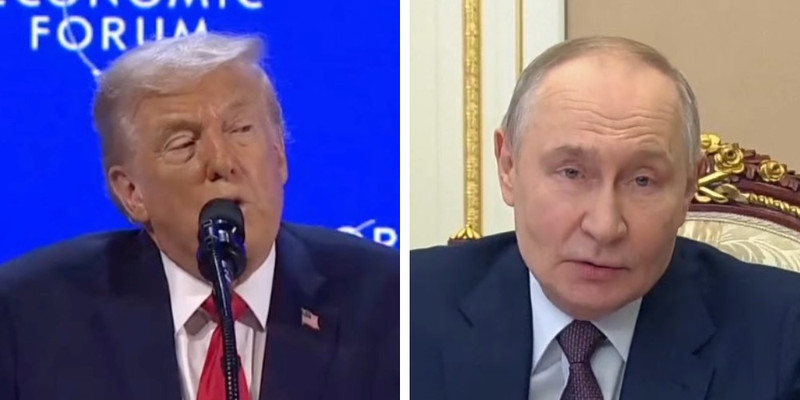
The US and Russia have an informal agreement to keep following the limits of the New START nuclear arms treaty after it expires Thursday, multiple sources familiar with the talks told Axios.
Negotiations took place over the past 24 hours in Abu Dhabi, where US envoys Steve Witkoff and Jared Kushner met with Russian officials on the sidelines of discussions tied to the war in Ukraine. The sources cautioned that while progress has been made, any arrangement would still require sign-off from President Donald Trump and Russian President Vladimir Putin.
New START, signed in 2010, is the last remaining treaty limiting the nuclear arsenals of the world’s two largest nuclear powers, which combined have roughly 85 percent of global warheads. The treaty caps deployed nuclear warheads on submarines, intercontinental missiles, and bombers, and includes inspection and transparency measures.
According to a US official, the treaty will formally expire on Thursday and any continuation would not be legally binding. Both sides would agree to observe its terms in good faith for a limited period.
“We agreed with Russia to operate in good faith and to start a discussion about ways it could be updated,” a US official said.
Another source said the tentative plan would see both countries follow New START’s limits for at least six months while negotiations on a broader replacement agreement continue. One official described the understanding as effectively a “handshake,” since US law does not allow for a formal extension under current conditions.
US European Command announced Thursday separately that military-to-military dialogue with Russia has resumed, ending a suspension that began in 2021 ahead of Russia’s invasion of Ukraine. That decision also emerged from the Abu Dhabi talks, according to sources.
Moscow has signaled openness to continued engagement. Kremlin spokesperson Dmitry Peskov said Russia was “ready for dialogue with the United States on limiting strategic offensive arms if Washington responds constructively.” The Russian foreign ministry has complained though that earlier this week, its proposals had gone unanswered.
Trump administration officials have long expressed skepticism about extending New START because it does not include China, whose nuclear arsenal is smaller but growing quickly. Secretary of State Marco Rubio reiterated this week that meaningful arms control in the modern era would need to account for Beijing.
China has shown little interest in joining any agreement that restricts its nuclear capabilities. Trump spoke with Chinese President Xi Jinping on Wednesday, though arms control was not mentioned in the official readout.
For now, sources said nothing is final until both Trump and Putin personally approve the arrangement
Negotiations took place over the past 24 hours in Abu Dhabi, where US envoys Steve Witkoff and Jared Kushner met with Russian officials on the sidelines of discussions tied to the war in Ukraine. The sources cautioned that while progress has been made, any arrangement would still require sign-off from President Donald Trump and Russian President Vladimir Putin.
New START, signed in 2010, is the last remaining treaty limiting the nuclear arsenals of the world’s two largest nuclear powers, which combined have roughly 85 percent of global warheads. The treaty caps deployed nuclear warheads on submarines, intercontinental missiles, and bombers, and includes inspection and transparency measures.
According to a US official, the treaty will formally expire on Thursday and any continuation would not be legally binding. Both sides would agree to observe its terms in good faith for a limited period.
“We agreed with Russia to operate in good faith and to start a discussion about ways it could be updated,” a US official said.
Another source said the tentative plan would see both countries follow New START’s limits for at least six months while negotiations on a broader replacement agreement continue. One official described the understanding as effectively a “handshake,” since US law does not allow for a formal extension under current conditions.
US European Command announced Thursday separately that military-to-military dialogue with Russia has resumed, ending a suspension that began in 2021 ahead of Russia’s invasion of Ukraine. That decision also emerged from the Abu Dhabi talks, according to sources.
Moscow has signaled openness to continued engagement. Kremlin spokesperson Dmitry Peskov said Russia was “ready for dialogue with the United States on limiting strategic offensive arms if Washington responds constructively.” The Russian foreign ministry has complained though that earlier this week, its proposals had gone unanswered.
Trump administration officials have long expressed skepticism about extending New START because it does not include China, whose nuclear arsenal is smaller but growing quickly. Secretary of State Marco Rubio reiterated this week that meaningful arms control in the modern era would need to account for Beijing.
China has shown little interest in joining any agreement that restricts its nuclear capabilities. Trump spoke with Chinese President Xi Jinping on Wednesday, though arms control was not mentioned in the official readout.
For now, sources said nothing is final until both Trump and Putin personally approve the arrangement