

A dispute over which flags should be flown on public buildings is drawing renewed attention across the United Kingdom, as councils, politicians, and advocacy groups clash over national symbols, immigration, and public space.
The issue accelerated following decisions by several local councils to raise the Palestinian flag on government buildings to mark the United Nations International Day of Solidarity with the Palestinian People. Councils in cities including Sheffield, Preston, Bradford, and Belfast took part in the display.
Each cited the UN observance as the basis for the move.
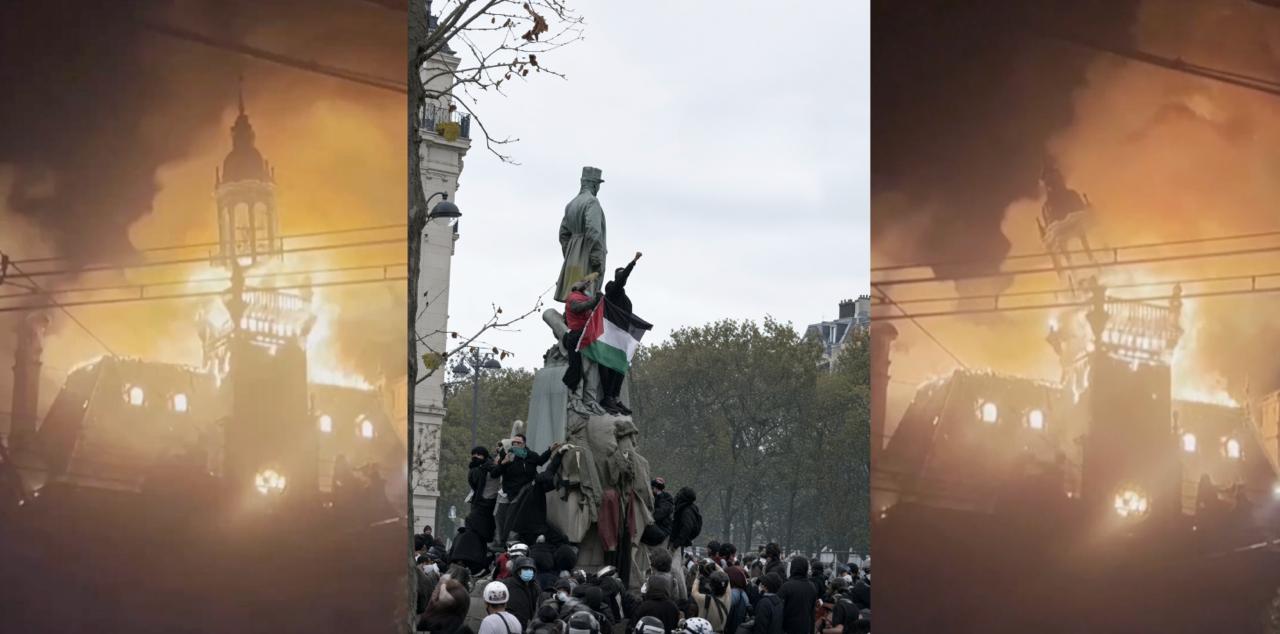
The flag decisions followed months of pro-Palestinian demonstrations across the UK after Hamas’ Oct. 7, 2023 attack on Israel. Since then, Palestinian flags have appeared widely at protests and on public property, prompting criticism from those who argue foreign political symbols do not belong on taxpayer-funded buildings.
Current guidance from GOV.UK states that local authorities should prioritize flying the Union flag, though it allows discretion for additional flags under certain circumstances. There is no statutory ban on foreign flags, leaving decisions largely up to councils.
British commentator Colin Brazier told Fox News that public buildings should only display national flags. “There’s only one flag that should be flying on public buildings in the U.K., and that’s the Union flag,” he said. Brazier has called for a formal policy barring foreign flags from government sites, arguing national symbols are key to social cohesion.
The controversy has also driven grassroots responses. In August, a campaign called “Operation Raise the Colours” encouraged people to display the Union Jack and England’s St. George’s Cross at their homes and in public-facing spaces. Organizers said the goal was to normalize national symbols that they believe have become politically charged.
The renewed visibility of British flags has drawn criticism from left-wing groups and activists, who argue the flags are increasingly associated with opposition to immigration or far-right politics. Some have said the displays make ethnic minorities feel targeted, while supporters of the campaign reject that characterization.
The debate reached Parliament after Prime Minister Keir Starmer recognized a Palestinian state in September. Days later, Starmer addressed the issue during a speech at the Labour Party conference, urging supporters to embrace national symbols. “Let’s fly all our flags… they belong to all of us,” he said, adding that the flags should represent unity while opposing racism.
Opposition politicians dismissed the remarks. Reform UK chief whip Lee Anderson told the Daily Telegraph, “You’re more likely to see a Labour member fly the flag of Palestine than a St. George’s flag. That tells you all you need to know.”
Some councils defended their decisions. Belfast City Council said it raised the Palestinian flag “in recognition of the International Day of Solidarity with the Palestinian People,” adding that the flag was flown in accordance with council procedures.
The dispute is unfolding alongside broader demographic and political shifts. A March 2025 report from the Muslim Council of Britain found that the UK’s Muslim population increased by 1.2 million between 2011 and 2021, accounting for about 6 percent of the population.
Polling reflects divided views. A YouGov survey found that 58 percent of 2024 Labour voters see the English flag as a racist symbol, compared to 19 percent of Conservative voters and 8 percent of Reform voters. Among ethnic minority respondents, 55 percent said displays of the St. George’s Cross are often motivated by anti-migrant sentiment, with similar views expressed about the Union flag.
As councils continue to exercise discretion over public displays, the question of which flags represent the country, and where they should appear, remains unresolved.
The issue accelerated following decisions by several local councils to raise the Palestinian flag on government buildings to mark the United Nations International Day of Solidarity with the Palestinian People. Councils in cities including Sheffield, Preston, Bradford, and Belfast took part in the display.
Each cited the UN observance as the basis for the move.
The flag decisions followed months of pro-Palestinian demonstrations across the UK after Hamas’ Oct. 7, 2023 attack on Israel. Since then, Palestinian flags have appeared widely at protests and on public property, prompting criticism from those who argue foreign political symbols do not belong on taxpayer-funded buildings.
Current guidance from GOV.UK states that local authorities should prioritize flying the Union flag, though it allows discretion for additional flags under certain circumstances. There is no statutory ban on foreign flags, leaving decisions largely up to councils.
British commentator Colin Brazier told Fox News that public buildings should only display national flags. “There’s only one flag that should be flying on public buildings in the U.K., and that’s the Union flag,” he said. Brazier has called for a formal policy barring foreign flags from government sites, arguing national symbols are key to social cohesion.
The controversy has also driven grassroots responses. In August, a campaign called “Operation Raise the Colours” encouraged people to display the Union Jack and England’s St. George’s Cross at their homes and in public-facing spaces. Organizers said the goal was to normalize national symbols that they believe have become politically charged.
The renewed visibility of British flags has drawn criticism from left-wing groups and activists, who argue the flags are increasingly associated with opposition to immigration or far-right politics. Some have said the displays make ethnic minorities feel targeted, while supporters of the campaign reject that characterization.
The debate reached Parliament after Prime Minister Keir Starmer recognized a Palestinian state in September. Days later, Starmer addressed the issue during a speech at the Labour Party conference, urging supporters to embrace national symbols. “Let’s fly all our flags… they belong to all of us,” he said, adding that the flags should represent unity while opposing racism.
Opposition politicians dismissed the remarks. Reform UK chief whip Lee Anderson told the Daily Telegraph, “You’re more likely to see a Labour member fly the flag of Palestine than a St. George’s flag. That tells you all you need to know.”
Some councils defended their decisions. Belfast City Council said it raised the Palestinian flag “in recognition of the International Day of Solidarity with the Palestinian People,” adding that the flag was flown in accordance with council procedures.
The dispute is unfolding alongside broader demographic and political shifts. A March 2025 report from the Muslim Council of Britain found that the UK’s Muslim population increased by 1.2 million between 2011 and 2021, accounting for about 6 percent of the population.
Polling reflects divided views. A YouGov survey found that 58 percent of 2024 Labour voters see the English flag as a racist symbol, compared to 19 percent of Conservative voters and 8 percent of Reform voters. Among ethnic minority respondents, 55 percent said displays of the St. George’s Cross are often motivated by anti-migrant sentiment, with similar views expressed about the Union flag.
As councils continue to exercise discretion over public displays, the question of which flags represent the country, and where they should appear, remains unresolved.