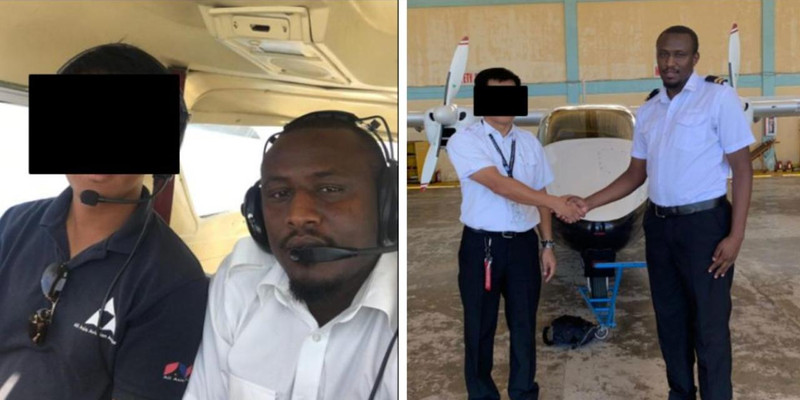

Cholo Abdi Abdullah, a Kenyan national and trained pilot linked to Somalia-based extremist group al-Shabaab, has been sentenced to two consecutive life terms in federal prison for plotting a September 11-style attack on the United States.
The sentence follows Abdullah’s conviction after jurors found him guilty in November on six counts, including conspiring to provide, and providing, material support to a foreign terrorist organization, and conspiring to murder US nationals. He was also convicted of conspiring to commit aircraft piracy, destroy aircraft, and carry out acts of terrorism transcending national boundaries.
Assistant Attorney General for National Security John A. Eisenberg said the sentencing marked the end of a case involving what officials described as an imminent and dangerous plan. Prosecutors said Abdullah intended to hijack a commercial airliner and crash it into a building on US soil. “We thwarted this plot due to the relentless efforts of US law enforcement and thereby likely saved many innocent lives,” Eisenberg said.
US Attorney Jay Clayton described Abdullah as a “highly trained al-Shabaab operative” who sought to replicate the worst terrorist attack in American history. Clayton said Abdullah pursued a commercial pilot’s license at a flight school in the Philippines while simultaneously conducting detailed attack planning, including how to get into the United States and how to overcome airline security. “As he later admitted to the FBI, he was fully prepared to die in his terrorist attack,” Clayton said.
Al-Shabaab, formally known as Harakat al-Shabaab al-Mujahideen, is an al Qaeda affiliate based in Somalia that US officials say has long relied on violence, including suicide bombings and mass-casualty assaults, to pursue its ideological goals. The US designated al-Shabaab as a foreign terrorist organization in 2008, citing its intent to target Americans and Western interests.
Court records show Abdullah joined al-Shabaab in 2015, spending a year at a series of safehouses in Somalia where he trained with senior operatives. Authorities said his instruction included weapons training with an AK-47 and lessons on building explosives. During that period, prosecutors said, he was recruited for a “greater plan” that went beyond battlefield operations: learning to fly so he could carry out an aviation-based terrorist attack.
Between October 2017 and July 2019, Abdullah enrolled at a flight school in the Philippines, logging hundreds of hours toward a commercial pilot license. Prosecutors said his tuition was financed by al-Shabaab, which they described as raising funds through an extensive extortion system in Somalia. By the time of his arrest in July 2019, Abdullah had nearly completed the requirements for his commercial pilot license and was close to earning the instrument rating needed for professional airline employment.
According to investigators, Abdullah’s planning included researching transit visas and testing whether it was possible to bring a knife onto an airplane. He also searched online for information about cockpit doors, in-flight security measures, and whether air marshals were present on flights. At one point, prosecutors said, he reviewed material on opening cockpit doors from the outside.
Authorities said Abdullah’s planning accelerated after al-Shabaab’s January 2019 attack on the DusitD2 hotel and office complex in Nairobi, Kenya. That assault, which al-Shabaab claimed as part of a broader al Qaeda-driven campaign, killed more than 20 people, including a U.S. citizen. Prosecutors said Abdullah’s handler, a senior operative involved in coordinating the Nairobi attack, used the operation as motivation, telling Abdullah that a fellow extremist had died “for the cause.”
Soon after, Abdullah reportedly began researching potential US targets. Authorities said he looked up Delta flights and searched for the tallest building in Atlanta, focusing on the Bank of America Plaza.
Prosecutors said Abdullah also sent progress reports to his handler detailing his training milestones and attack ideas. In one report, he cited the 9/11 hijackers’ approach of learning to fly and concluded that the best way to carry out a successful post-9/11 hijacking would be to have a pilot inside the cockpit, and that he should apply for airline jobs.
Abdullah was arrested in the Philippines before he could complete his training. He was transferred to US custody in December 2020. In addition to the prison sentence, Abdullah, 34, was ordered to serve a lifetime term of supervised release.
The sentence follows Abdullah’s conviction after jurors found him guilty in November on six counts, including conspiring to provide, and providing, material support to a foreign terrorist organization, and conspiring to murder US nationals. He was also convicted of conspiring to commit aircraft piracy, destroy aircraft, and carry out acts of terrorism transcending national boundaries.
Assistant Attorney General for National Security John A. Eisenberg said the sentencing marked the end of a case involving what officials described as an imminent and dangerous plan. Prosecutors said Abdullah intended to hijack a commercial airliner and crash it into a building on US soil. “We thwarted this plot due to the relentless efforts of US law enforcement and thereby likely saved many innocent lives,” Eisenberg said.
US Attorney Jay Clayton described Abdullah as a “highly trained al-Shabaab operative” who sought to replicate the worst terrorist attack in American history. Clayton said Abdullah pursued a commercial pilot’s license at a flight school in the Philippines while simultaneously conducting detailed attack planning, including how to get into the United States and how to overcome airline security. “As he later admitted to the FBI, he was fully prepared to die in his terrorist attack,” Clayton said.
Al-Shabaab, formally known as Harakat al-Shabaab al-Mujahideen, is an al Qaeda affiliate based in Somalia that US officials say has long relied on violence, including suicide bombings and mass-casualty assaults, to pursue its ideological goals. The US designated al-Shabaab as a foreign terrorist organization in 2008, citing its intent to target Americans and Western interests.
Court records show Abdullah joined al-Shabaab in 2015, spending a year at a series of safehouses in Somalia where he trained with senior operatives. Authorities said his instruction included weapons training with an AK-47 and lessons on building explosives. During that period, prosecutors said, he was recruited for a “greater plan” that went beyond battlefield operations: learning to fly so he could carry out an aviation-based terrorist attack.
Between October 2017 and July 2019, Abdullah enrolled at a flight school in the Philippines, logging hundreds of hours toward a commercial pilot license. Prosecutors said his tuition was financed by al-Shabaab, which they described as raising funds through an extensive extortion system in Somalia. By the time of his arrest in July 2019, Abdullah had nearly completed the requirements for his commercial pilot license and was close to earning the instrument rating needed for professional airline employment.
According to investigators, Abdullah’s planning included researching transit visas and testing whether it was possible to bring a knife onto an airplane. He also searched online for information about cockpit doors, in-flight security measures, and whether air marshals were present on flights. At one point, prosecutors said, he reviewed material on opening cockpit doors from the outside.
Authorities said Abdullah’s planning accelerated after al-Shabaab’s January 2019 attack on the DusitD2 hotel and office complex in Nairobi, Kenya. That assault, which al-Shabaab claimed as part of a broader al Qaeda-driven campaign, killed more than 20 people, including a U.S. citizen. Prosecutors said Abdullah’s handler, a senior operative involved in coordinating the Nairobi attack, used the operation as motivation, telling Abdullah that a fellow extremist had died “for the cause.”
Soon after, Abdullah reportedly began researching potential US targets. Authorities said he looked up Delta flights and searched for the tallest building in Atlanta, focusing on the Bank of America Plaza.
Prosecutors said Abdullah also sent progress reports to his handler detailing his training milestones and attack ideas. In one report, he cited the 9/11 hijackers’ approach of learning to fly and concluded that the best way to carry out a successful post-9/11 hijacking would be to have a pilot inside the cockpit, and that he should apply for airline jobs.
Abdullah was arrested in the Philippines before he could complete his training. He was transferred to US custody in December 2020. In addition to the prison sentence, Abdullah, 34, was ordered to serve a lifetime term of supervised release.