
Ukraine was hit with political turbulence on Friday after President Volodymyr Zelensky’s top adviser abruptly resigned just hours after anti-corruption investigators searched his home, Axios reports. The shake-up comes at a moment when Kyiv is already under pressure to engage seriously in peace talks aimed at ending the war with Russia.
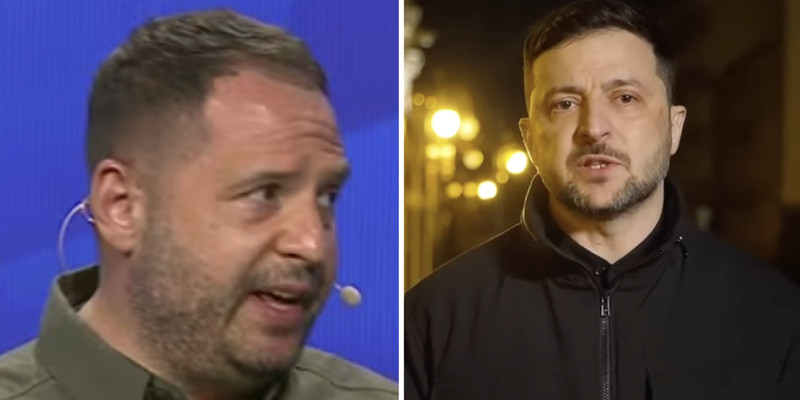
Andriy Yermak, formally Zelensky’s chief of staff but widely viewed as the president’s most influential aide, had been leading Ukraine’s delegation in recent Geneva discussions with American officials. His departure immediately raises questions about who will take point for Kyiv in upcoming negotiations with Washington.
Zelensky announced the resignation in an address, framing it as part of a broader restructuring inside the presidential administration. "I want no one to have any questions about Ukraine today. Therefore, today we have the following internal decisions. First, there will be a reboot of the Office of the President of Ukraine. The head of the office, Andriy Yermak, has written a letter of resignation," Zelensky said.
Yermak has not released a full public statement, but he confirmed earlier in the day that his residence was being searched. On Telegram, he said he was “fully cooperating” with authorities. "The investigators are not encountering any obstacles. They have been given full access to the apartment, and my lawyers are on site, interacting with law enforcement officials," he wrote.
Ukraine’s two central anti-corruption bodies — the National Anti-Corruption Bureau of Ukraine (NABU) and the Specialized Anti-Corruption Prosecutor’s Office (SAPO) — carried out the operation, the agencies said in a joint statement.
The timing of the raid and resignation is particularly sensitive. Kyiv is preparing for another round of talks with the United States as Washington pushes for a potential framework to wind down the conflict. Yermak’s absence removes the top negotiator and longtime Zelensky confidant at a moment when Ukraine’s military and political position has become increasingly strained.
Zelensky did not name an interim replacement, and it remains unclear how quickly a new senior negotiator will be appointed. For now, the sudden move injects uncertainty into Ukraine’s already fragile diplomatic posture as discussions with the US intensify.
Regarding the investigations, The New York Times recently wrote:
"At the heart of the case is Energoatom, the nuclear power company. Investigators said that participants in the scheme had pressured Energoatom contractors to pay kickbacks of 10 to 15 percent.
"If contractors refused, they were denied payments owed by Energoatom, according to investigators. The scheme, they said, exploited a rule under martial law that prevents contractors from collecting debts in court from companies providing essential services, including Energoatom, which covers more than half of Ukraine’s electricity needs.
"Investigators said that some kickbacks had been tied to contracts for building protective shelters over critical equipment used to supply power to nuclear plants. Russia has targeted electricity substations connected to the plants."