NICOLE RUSSELL: Hollywood should heed the family values messaging of the 'Fantastic Four'
In this film, the sacrifice and strong family bond that all the “Fantastic Four” share are undeniable, powerful, and refreshing to see in a Hollywood film, action-adventure or otherwise.
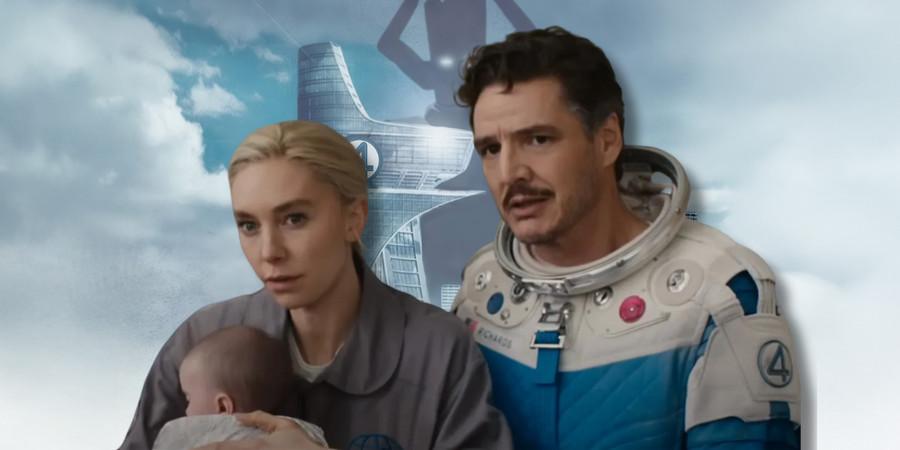
I saw “Fantastic Four: First Steps” with my 11-year-old son this weekend, and it was better than we both expected. It performed better at the box office than expected, too. The newest film in the Marvel universe was adventurous, heart-pounding, and promoted pro-life values, as well as family values. There wasn’t a hint of wokeness. I hope Hollywood takes note of this and learns from it. Variety reports that the film, featuring Reed Richards as Mister Fantastic (played by Pedro Pascal), Sue Storm as Invisible Woman (played by Vanessa Kirby), Johnny Storm as Human Torch (played by Joseph Quinn), and Ben Grimm as The Thing (played by Ebon Moss-Bachrach) made some $118 million in North America on opening weekend and another $100 million worldwide. A much-needed win for Marvel, which Rotten Tomatoes suggested hasn’t had a hit in a few years.
“Fantastic Four” treats unborn babies with respect. The film follows the married couple, Mister Fantastic and Invisible Woman, as they navigate an unexpected, yet desired, pregnancy after years of trying to conceive. The climax comes when the group must also protect a very cool-looking retro yet futuristic version of Earth from Galactus, a planet-eating, robot-looking being that makes Goliath look like an ant. (I’m sure my son didn’t care about this, but I kept thinking: What year could this be where cars look like they’re from the 1960s but people also enjoy advanced technology?)
The film is a bit slow at first, and I admit, I was actually a bit thrown by the introduction of a pregnancy as a key element of an action film. I glanced at my young son and wondered if he’d think it was boring. As a mother of four, I immediately appreciated that the couple views her pregnancy through a distinctly pro-life lens, unusual in Hollywood. Mister Fantastic is concerned about the genetic mutations that have given them powers, so he creates an ultrasound machine of sorts to test the unborn baby. It sounds cold and scientific, but I assure you, he comes across as loving, parental, and again, rabidly pro-life. At one point, he hugs her belly, and the unborn baby lights up; his tiny body looking distinctly human.
Even more interesting for an action adventure film is that the introduction of the unborn baby is a key plot point: Turns out when the foursome confront Galactus for the first time and warn him not to eat their precious world, he sees Invisible Woman’s pregnant belly and demands the baby in exchange because he says only the baby boy can satiate his relentless hunger.
Of course, mom and dad refuse to sacrifice the baby. To do so would be out of the question. Even this is an unusual approach for Hollywood. Over and over, “Fantastic Four” movie promotes family values and even traditional gender roles, albeit in a unique way that’s surprisingly fitting for 2025.
After Invisible Woman gives birth in a moving spacecraft attempting to escape the gravity of a planet to fling back to Earth — a rockstar move, if I do say so — everyone, including the other two superheroes who are related to them, determines they must somehow save the baby boy and Earth.
Hollywood has had a string of woke films over the years. Some do well. Some don’t. Either way, they don’t seem like they enjoy enough success to shove politically correct themes into films regularly. Audiences show through their movie attendance that they really don’t seem to want that, even though Hollywood itself is notoriously liberal.
The conclusion effectively highlights the film’s emphasis on family values and traditional roles. With Galactus moving in close, the foursome attempt to teleport their Earth elsewhere, but that fails. They realize Galactus is coming for the boy anyway, so they decide to use him as bait to entrap the massive villain at a set “x” spot in the city. The trap almost works, but Galactus is still able to storm through what looks like Manhattan and snatch the baby.
Invisible Woman—mom—comes through with the kind of primal “Mama Bear” energy all moms recognize from multiple planets away. With her incredible superpowers, she pushes Galactus to the target point, where the team can rid him of their world through a wormhole. But the task is so difficult, she collapses in exhaustion and appears to die.
All mothers will empathize with the energy and resources it takes to raise, and sometimes even save, their children. Yet most mothers, and most fathers, do not hesitate to give all they have for them, whether they’re babies or teenagers. Ironically, it’s the baby’s “powers” that bring mom back to life. I loved seeing two sides of motherhood portrayed here. It is hard to raise kids, but it is worth it. Often, the love shared between kids and their parents is what makes it all worthwhile.
In this film, the sacrifice and strong family bond that all the “Fantastic Four” share are undeniable, powerful, and refreshing to see in a Hollywood film, action-adventure or otherwise. I hope Hollywood executives are taking note. The film promoted family values, was a smashing success, and was fun to boot. More like it, please.
Related
More Culture