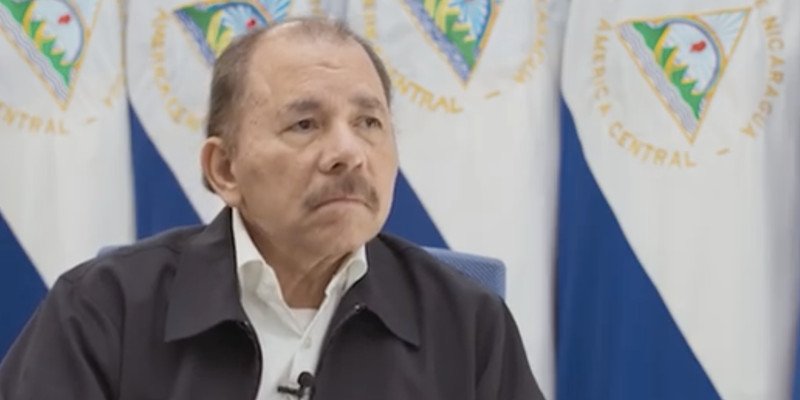

Nicaraguan President Daniel Ortega announced that the country will no longer hold elections that allow opponents to take control of the government, declaring the change during a celebration marking the 47th anniversary of the Sandinista Revolution.
The announcement came Sunday as Ortega and his wife, Rosario Murillo, continued implementing constitutional changes that were introduced last year. Those reforms made Murillo “co-president” and extended presidential terms from five years to six.
Ortega, 80, did not explain exactly how elections would be eliminated or what process would replace them. The announcement comes before Nicaragua’s next scheduled presidential election in November 2027.
The move follows years of increasing pressure on opposition groups and civil society organizations. Ortega returned to power in 2007 after previously serving as president during the 1980s and has remained in office since then.
Nicaragua’s last election in 2021 was widely disputed after Ortega’s government arrested opposition candidates, activists, and members of the business community ahead of the vote.
Juan Sebastián Chamorro, who ran as a presidential candidate in that election and was later imprisoned before being released to the United States in 2023 along with more than 200 other political prisoners, said Ortega’s announcement confirmed efforts to consolidate control under the Sandinista party.
Human rights organizations condemned Ortega’s statement, while the Mechanism for Recognition of Political Prisoners, an exile-based group that tracks politically motivated detentions, said at least 46 people remain imprisoned for political reasons in Nicaragua.
The Ortega-Murillo government has also targeted organizations across the country. Since 2018, more than 5,000 organizations have been shut down, many of them religious groups, according to reports, leading thousands of people to leave Nicaragua.
Earlier this month, authorities revoked the professional licenses of numerous lawyers. United Nations experts described the move as a large-scale purge of the legal profession.
After a US operation in Venezuela resulted in the capture of Nicols Maduro in January, Nicaragua’s government announced it would release additional dissidents.
The announcement came Sunday as Ortega and his wife, Rosario Murillo, continued implementing constitutional changes that were introduced last year. Those reforms made Murillo “co-president” and extended presidential terms from five years to six.
Ortega, 80, did not explain exactly how elections would be eliminated or what process would replace them. The announcement comes before Nicaragua’s next scheduled presidential election in November 2027.
The move follows years of increasing pressure on opposition groups and civil society organizations. Ortega returned to power in 2007 after previously serving as president during the 1980s and has remained in office since then.
Nicaragua’s last election in 2021 was widely disputed after Ortega’s government arrested opposition candidates, activists, and members of the business community ahead of the vote.
Juan Sebastián Chamorro, who ran as a presidential candidate in that election and was later imprisoned before being released to the United States in 2023 along with more than 200 other political prisoners, said Ortega’s announcement confirmed efforts to consolidate control under the Sandinista party.
Human rights organizations condemned Ortega’s statement, while the Mechanism for Recognition of Political Prisoners, an exile-based group that tracks politically motivated detentions, said at least 46 people remain imprisoned for political reasons in Nicaragua.
The Ortega-Murillo government has also targeted organizations across the country. Since 2018, more than 5,000 organizations have been shut down, many of them religious groups, according to reports, leading thousands of people to leave Nicaragua.
Earlier this month, authorities revoked the professional licenses of numerous lawyers. United Nations experts described the move as a large-scale purge of the legal profession.
After a US operation in Venezuela resulted in the capture of Nicols Maduro in January, Nicaragua’s government announced it would release additional dissidents.