
Voting patterns among gay communities across Europe are changing, with growing support within that community for right-wing parties now visible in multiple countries. Britain has not yet followed the trend at scale, but signs suggest it may be heading in that direction, raising questions about which party on the right stands to gain.
Examples from continental Europe point to a clear shift, according to a report titled The Rise of Homonationalism in Spiked. In France, a viral video recently showed a flamboyantly dressed young man refusing to repeat an Arabic phrase on camera, bluntly responding, “No. We’re in France here.” The clip circulated widely and was widely read as a statement of cultural confidence rather than provocation.
Data from France’s National Assembly also supports the shift. Reporting by LGBT outlet Têtu found that the National Rally sent more openly gay MPs to parliament in 2022 than any other party. Of its 89 MPs, between 20 and 25 are believed to be gay, based on public records.
Spain shows a similar pattern. Gay online personalities such as Carlitos de España, a Bolivian-born YouTuber based in Barcelona, have built large audiences warning about threats they associate with Islam and immigration. Carlitos has said, “Islam keeps me up at night. They want me dead.” He and others helped form Las Marifachas, a group that openly aligns parts of Spain’s LGBT community with the Vox party.
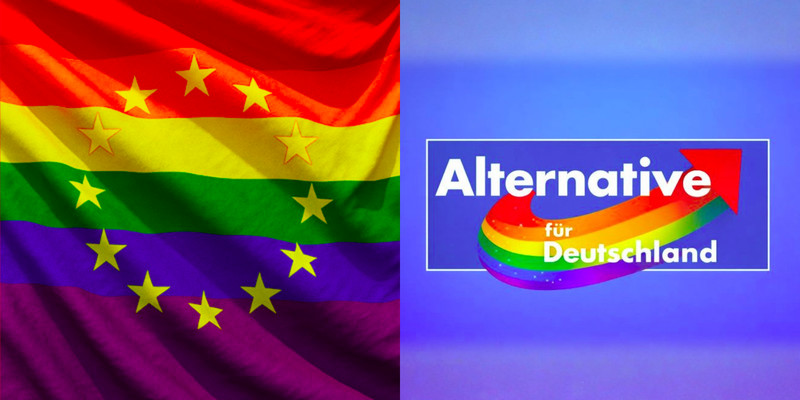
Germany offers the clearest polling data. A survey of more than 60,000 users of the gay dating app Romeo found the Alternative for Germany as the most popular party among respondents, with nearly 28 percent support. The Greens followed at about 20 percent, while the center-left SPD trailed at 12.5 percent. AfD leader Alice Weidel, who is in a long-term same-sex partnership, has become a visible symbol of the party’s appeal to some gay voters.
This shift is often described as “homonationalism,” and represents the belief that gay rights are rooted in specific cultural and legal traditions, namely European ones. Critics of progressive politics argue that mass immigration from countries hostile to homosexuality has been ignored or downplayed.
In Britain, the trend has been slower to emerge, but anecdotal evidence suggests movement. Some gay voters who once supported left-wing parties now openly back Reform UK or the Conservatives, a position that would have been rare a decade ago.
The UK tories have a sizable LGBT wing and legalized same-sex marriage while in government, but it might not be enough to curve Reform. Reform UK doesn't have formal LGBT structures, but its blunt messaging on borders and national identity resonate with voters who see cultural stability as tied to personal freedom.
Examples from continental Europe point to a clear shift, according to a report titled The Rise of Homonationalism in Spiked. In France, a viral video recently showed a flamboyantly dressed young man refusing to repeat an Arabic phrase on camera, bluntly responding, “No. We’re in France here.” The clip circulated widely and was widely read as a statement of cultural confidence rather than provocation.
Data from France’s National Assembly also supports the shift. Reporting by LGBT outlet Têtu found that the National Rally sent more openly gay MPs to parliament in 2022 than any other party. Of its 89 MPs, between 20 and 25 are believed to be gay, based on public records.
Spain shows a similar pattern. Gay online personalities such as Carlitos de España, a Bolivian-born YouTuber based in Barcelona, have built large audiences warning about threats they associate with Islam and immigration. Carlitos has said, “Islam keeps me up at night. They want me dead.” He and others helped form Las Marifachas, a group that openly aligns parts of Spain’s LGBT community with the Vox party.
Germany offers the clearest polling data. A survey of more than 60,000 users of the gay dating app Romeo found the Alternative for Germany as the most popular party among respondents, with nearly 28 percent support. The Greens followed at about 20 percent, while the center-left SPD trailed at 12.5 percent. AfD leader Alice Weidel, who is in a long-term same-sex partnership, has become a visible symbol of the party’s appeal to some gay voters.
This shift is often described as “homonationalism,” and represents the belief that gay rights are rooted in specific cultural and legal traditions, namely European ones. Critics of progressive politics argue that mass immigration from countries hostile to homosexuality has been ignored or downplayed.
In Britain, the trend has been slower to emerge, but anecdotal evidence suggests movement. Some gay voters who once supported left-wing parties now openly back Reform UK or the Conservatives, a position that would have been rare a decade ago.
The UK tories have a sizable LGBT wing and legalized same-sex marriage while in government, but it might not be enough to curve Reform. Reform UK doesn't have formal LGBT structures, but its blunt messaging on borders and national identity resonate with voters who see cultural stability as tied to personal freedom.