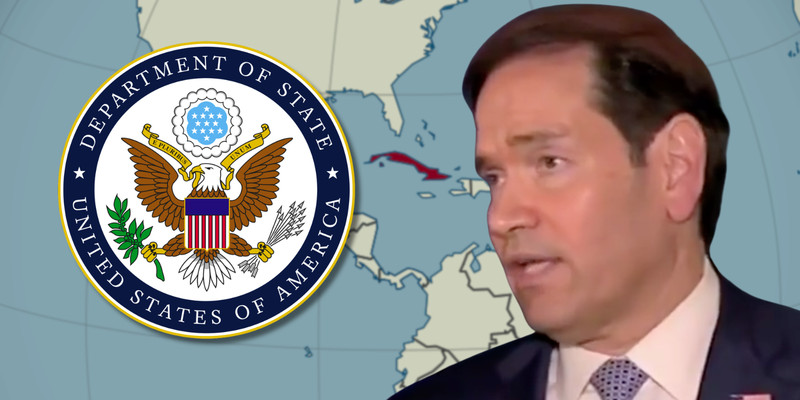

Secretary of State Marco Rubio said the United States will not allow communist influence campaigns to undermine American politics and society, pointing to Cuba as a longtime source of ideological influence operations in the Western Hemisphere.The secretary noted that the end goal would be to uproot the communists and have "Cuba where the people of Cuba can experience prosperity, safety, security and a better life moving forward."
“Well, again, what the president put out on Thursday that was a declassification of documents from our intelligence community. That's what he put out. He declassified intelligence assessments from our intelligence community,” Rubio said.
“But your question was about communist influence. Yeah, the United States doesn't want to be a communist country. We're never going to be a communist country and we're not going to allow communist influences to undermine our politics or our society.”
The US recognizes the influence campaigns used by authoritarian governments and argued that communist efforts to create divisions within America would not be tolerated, with Rubio stating “We certainly understand the Chinese system and other systems, but I can tell you our system doesn't want communism,” Rubio said. “And we're certainly not going to allow communist efforts to undermine American society and drive wedges into our country.”
“And that's what we're seeing, you know. And by the way, one of the leading, you know, culprits of that for many years, the intellectual authors, particularly in our hemisphere, is the Cuban regime, which our report on Monday outlined,” Rubio said.
The comments came after the State Department released a 100-page report titled “Cuba: The Capital of 21st Century Communism,” which examined decades of tensions between Washington and Havana and portrayed the Cuban government as an ongoing ideological threat to the United States.
The report claims the Cuban regime developed a “sprawling revolutionary network” that influenced a number of prominent American extremist and activist movements.
“For nearly seven decades, the Cuban regime has waged a sustained campaign of subversion against the United States,” the report states. “It is a campaign that has infiltrated the highest reaches of the U.S. government, recruited and cultivated generations of American activists, backed an unprecedented wave of left-wing terrorism on American soil, and carried out one of the most durable and damaging foreign intelligence penetrations in American history.”
The document argues that Cuba has relied less on conventional military power and instead focused on espionage, infiltration, sabotage, proxy networks, and revolutionary organizing.
“The Cuban campaign against America is unique,” the report states. “It is irregular and covert — even at the peak of its military power, Havana never possessed the capacity to defeat the United States in a conventional armed conflict.”
The report also accuses Cuba of maintaining relationships with left-wing organizations in the United States, including progressive nonprofits, anti-ICE groups, socialist organizations, and Marxist militant organizations.
It references groups including Black Lives Matter and the now infamous Democratic Socialists of America. The report states that Black Lives Matter “firmly sided with the Cuban government over the protestors in the streets” during 2021 anti-government demonstrations, citing the organization’s calls for the United States to end its embargo on Cuba. BLM has denied supporting the Cuban government and said its statement focused on U.S. policy toward the island.
The document also highlights the Democratic Socialists of America’s support for improved U.S.-Cuba relations.
“We’re prepared to be realistic about how you do that and patient about the serious process that leads to that. We’ve engaged them from time to time in that regard and know where we stand on that issue. Hopefully that’s where it arrives. The fundamental problem they have right now is two things: their economic system doesn’t work—that economic system doesn’t exist anywhere else in the world—it doesn’t work. That’s why people have to leave that country. Number two, they no longer get free oil from Venezuela,” Rubio told reporters.
Speaking about newly declassified intelligence assessments and a recent State Department report on Cuba, Rubio said the government is focused on preventing foreign actors from exploiting domestic divisions.“Well, again, what the president put out on Thursday that was a declassification of documents from our intelligence community. That's what he put out. He declassified intelligence assessments from our intelligence community,” Rubio said.
“But your question was about communist influence. Yeah, the United States doesn't want to be a communist country. We're never going to be a communist country and we're not going to allow communist influences to undermine our politics or our society.”
The US recognizes the influence campaigns used by authoritarian governments and argued that communist efforts to create divisions within America would not be tolerated, with Rubio stating “We certainly understand the Chinese system and other systems, but I can tell you our system doesn't want communism,” Rubio said. “And we're certainly not going to allow communist efforts to undermine American society and drive wedges into our country.”
“And that's what we're seeing, you know. And by the way, one of the leading, you know, culprits of that for many years, the intellectual authors, particularly in our hemisphere, is the Cuban regime, which our report on Monday outlined,” Rubio said.
The comments came after the State Department released a 100-page report titled “Cuba: The Capital of 21st Century Communism,” which examined decades of tensions between Washington and Havana and portrayed the Cuban government as an ongoing ideological threat to the United States.
The report claims the Cuban regime developed a “sprawling revolutionary network” that influenced a number of prominent American extremist and activist movements.
“For nearly seven decades, the Cuban regime has waged a sustained campaign of subversion against the United States,” the report states. “It is a campaign that has infiltrated the highest reaches of the U.S. government, recruited and cultivated generations of American activists, backed an unprecedented wave of left-wing terrorism on American soil, and carried out one of the most durable and damaging foreign intelligence penetrations in American history.”
The document argues that Cuba has relied less on conventional military power and instead focused on espionage, infiltration, sabotage, proxy networks, and revolutionary organizing.
“The Cuban campaign against America is unique,” the report states. “It is irregular and covert — even at the peak of its military power, Havana never possessed the capacity to defeat the United States in a conventional armed conflict.”
The report also accuses Cuba of maintaining relationships with left-wing organizations in the United States, including progressive nonprofits, anti-ICE groups, socialist organizations, and Marxist militant organizations.
It references groups including Black Lives Matter and the now infamous Democratic Socialists of America. The report states that Black Lives Matter “firmly sided with the Cuban government over the protestors in the streets” during 2021 anti-government demonstrations, citing the organization’s calls for the United States to end its embargo on Cuba. BLM has denied supporting the Cuban government and said its statement focused on U.S. policy toward the island.
The document also highlights the Democratic Socialists of America’s support for improved U.S.-Cuba relations.