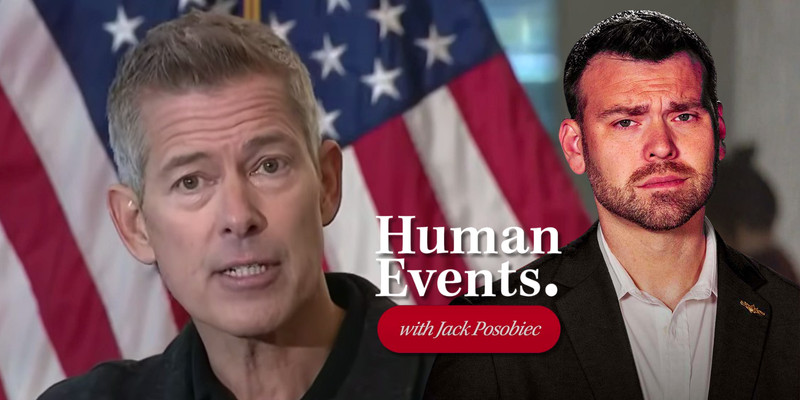

Jack Posobiec spoke with Transportation Secretary Sean Duffy on Human Events Daily on Tuesday, where the two discussed mounting concerns over commercial driver’s licenses (CDL), trucking safety, and alleged fraud in the CDL system. The conversation centered on what they described as weakened standards, inconsistent state enforcement, and the broader impact on American truckers and highway safety.
Posobiec opened the segment by recalling the cultural familiarity many Americans once had with truck drivers and CB radio communication, contrasting it with what he characterized as declining trust in the system today.
“When I was growing up, my dad was a big CB radio guy… we always had a CB radio. So we’re always talking to the drivers and it was a great thing. It was just that kind of camaraderie of being out on the open road… Now, it seems that that whole camaraderie and thinking that you can trust those trucks, it seems like it’s broken, quite frankly.”
Posobiec argued that part of the problem stems from what he described as unqualified or improperly vetted drivers entering the industry. He asked Duffy what federal officials have found while reviewing licensing and training systems.
Secretary Duffy pointed to what he called systemic fraud in CDL training programs and inconsistent enforcement across states.
“You see these crashes that are happening across the country and oftentimes they’re with drivers who should never have a driver’s license. So there’s a broader problem in trucking where over the last 10, 20 years, you’ve seen a lot of fraud come into the space and it was just allowed to form.”
Duffy criticized what he described as weakened oversight in training schools and testing procedures, arguing that some programs operate without meaningful instruction or equipment.
“It’s like the learning center in Minneapolis. You have people that go like this: give me a thousand dollars, I’ll give you the certificate that you completed the coursework to have the knowledge to be a commercial driver… In these schools, they didn’t have a curriculum. They didn’t have any trucks for any drivers, any of these students to drive.”
He also described what he said was a breakdown in testing integrity due to outsourcing and lack of oversight.
“A lot of states will outsource the testing of a commercial driver. And if you don’t do oversight over the third-party testers, you can pay off the tester as well to then give you a license and you never went to school. And then you get in an 80,000-pound big rig and you hit the road, which is insanity.”
A major portion of the discussion focused on state-level compliance with federal CDL standards, particularly so-called “non-domiciled” licenses issued to foreign nationals. Duffy said federal audits uncovered significant irregularities.
“We did an audit of New York: 53 percent of their non-domiciled or commercial driver’s licenses issued to foreigners were issued illegally or contrary to our rules.” Posobiec interjected to confirm the figure, asking whether it was truly more than half. Duffy affirmed it was.
The secretary also criticized what he described as resistance from certain states when asked to correct licensing practices, saying federal funding has been used as leverage to enforce compliance.
“They basically told me to pound sand. So we just pulled $73 million. We will eventually pull more money from the state of New York.”
He added that further penalties could follow if states do not comply with federal requirements, including potential restrictions on licensing authority.
The conversation also touched on political responsibility for enforcement failures. Posobiec pointed to Pennsylvania and New York as examples, while Duffy argued the issue transcends partisan politics and is fundamentally about safety.
“There’s absolutely not [a left-right issue]. It’s just about safety.”
Duffy acknowledged ideological disagreements over enforcement priorities, arguing that some jurisdictions prioritize broader immigration considerations over roadway safety outcomes.
“I think they think they’re serving the undocumented legal community, the marginalized of the world. But when you hurt your own citizens, when Americans die on the way to church or on the way to Walmart because of one of these drivers, that’s a bridge too far.”
The secretary also said regulatory failures have impacted wages and working conditions for American truck drivers, claiming that fraudulent licensing and noncompliance have depressed pay in the industry.
“They’re driving down the rates and the pay for the actual great Americans who were making a great living to support their families. They now can’t make a living."
Posobiec opened the segment by recalling the cultural familiarity many Americans once had with truck drivers and CB radio communication, contrasting it with what he characterized as declining trust in the system today.
“When I was growing up, my dad was a big CB radio guy… we always had a CB radio. So we’re always talking to the drivers and it was a great thing. It was just that kind of camaraderie of being out on the open road… Now, it seems that that whole camaraderie and thinking that you can trust those trucks, it seems like it’s broken, quite frankly.”
Posobiec argued that part of the problem stems from what he described as unqualified or improperly vetted drivers entering the industry. He asked Duffy what federal officials have found while reviewing licensing and training systems.
Secretary Duffy pointed to what he called systemic fraud in CDL training programs and inconsistent enforcement across states.
“You see these crashes that are happening across the country and oftentimes they’re with drivers who should never have a driver’s license. So there’s a broader problem in trucking where over the last 10, 20 years, you’ve seen a lot of fraud come into the space and it was just allowed to form.”
Duffy criticized what he described as weakened oversight in training schools and testing procedures, arguing that some programs operate without meaningful instruction or equipment.
“It’s like the learning center in Minneapolis. You have people that go like this: give me a thousand dollars, I’ll give you the certificate that you completed the coursework to have the knowledge to be a commercial driver… In these schools, they didn’t have a curriculum. They didn’t have any trucks for any drivers, any of these students to drive.”
He also described what he said was a breakdown in testing integrity due to outsourcing and lack of oversight.
“A lot of states will outsource the testing of a commercial driver. And if you don’t do oversight over the third-party testers, you can pay off the tester as well to then give you a license and you never went to school. And then you get in an 80,000-pound big rig and you hit the road, which is insanity.”
A major portion of the discussion focused on state-level compliance with federal CDL standards, particularly so-called “non-domiciled” licenses issued to foreign nationals. Duffy said federal audits uncovered significant irregularities.
“We did an audit of New York: 53 percent of their non-domiciled or commercial driver’s licenses issued to foreigners were issued illegally or contrary to our rules.” Posobiec interjected to confirm the figure, asking whether it was truly more than half. Duffy affirmed it was.
The secretary also criticized what he described as resistance from certain states when asked to correct licensing practices, saying federal funding has been used as leverage to enforce compliance.
“They basically told me to pound sand. So we just pulled $73 million. We will eventually pull more money from the state of New York.”
He added that further penalties could follow if states do not comply with federal requirements, including potential restrictions on licensing authority.
The conversation also touched on political responsibility for enforcement failures. Posobiec pointed to Pennsylvania and New York as examples, while Duffy argued the issue transcends partisan politics and is fundamentally about safety.
“There’s absolutely not [a left-right issue]. It’s just about safety.”
Duffy acknowledged ideological disagreements over enforcement priorities, arguing that some jurisdictions prioritize broader immigration considerations over roadway safety outcomes.
“I think they think they’re serving the undocumented legal community, the marginalized of the world. But when you hurt your own citizens, when Americans die on the way to church or on the way to Walmart because of one of these drivers, that’s a bridge too far.”
The secretary also said regulatory failures have impacted wages and working conditions for American truck drivers, claiming that fraudulent licensing and noncompliance have depressed pay in the industry.
“They’re driving down the rates and the pay for the actual great Americans who were making a great living to support their families. They now can’t make a living."