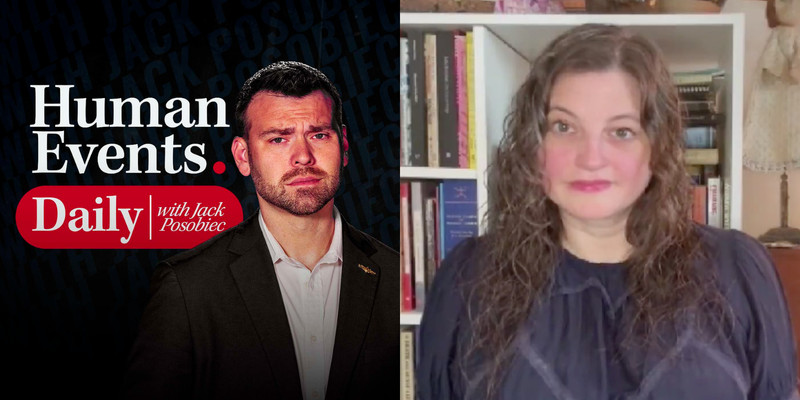

On Tuesday’s edition of Human Events Daily, host Jack Posobiec opened the show with a monologue tackling the growing pattern of mass shootings carried out by trans individuals. He was later joined by Human Events and Post Millennial editor-in-chief Libby Emmons to discuss the refusal by corporate media outlets to report on the ideological elements surrounding such cases.
“We've now had two trans mass shootings in one week,” Posobiec said at the outset. “Now, if you go look at the media, you won’t find this anywhere. You won’t find this information. You won’t find this written out.” Posobiec's comments come following two separate shootings in North America over the past week.
On February 16 in Pawtucket, Rhode Island, Robert “Roberta” Dorgan—identified in some reports as Robert Dugan, who also went by the name Roberta Esposito—opened fire at a high school hockey game. Dorgan, who identified as transgender, shot three of his children, his ex-wife, and one of their friends before killing himself. His ex-wife and one of their sons were killed in the attack.
Dorgan left behind a lengthy social media history. In a post made the day before the shooting, responding to actor Kevin Sorbo—who had referred to trans Delaware US Rep. Sarah McBride as a man—Dorgan wrote: “keep bashing us, but do not wonder why we Go BERSERK.” A woman who said the shooter had been her father told reporters that he had “mental health issues.” Dorgan had also frequently posted criticism of his ex-wife over the years of his transition.
Just days earlier, on February 10, Jesse Van Rootselaar—also known as Jesse Strang—a trans-identified male, carried out a mass shooting in Tumbler Ridge, British Columbia. Van Rootselaar shot and killed his mother and brother at a residence before proceeding to Tumbler Ridge Secondary School, where six more people, five of them children, were killed. He later died by suicide.
Online posts attributed to Van Rootselaar detailed a complex mental health history. On Reddit, he wrote that he was taking the SSRI sertraline and occasionally used the antipsychotic risperidone “for sleep,” and that he smoked “a decent bit of weed.” He posted in forums about psychedelic mushrooms and DMT, writing about one experience in which he “went crazy and burnt my house down my second time trying shrooms.” He also claimed diagnoses of ADHD, Major Depressive Disorder, Autism Spectrum Disorder, and OCD, and said he had spent time in a psychiatric ward.
Against that backdrop, Posobiec accused legacy outlets of downplaying or omitting the transgender identification of suspects in such cases.
“It has become a pattern. It has become an epidemic that every time one of these things happen, suddenly… there’s a local report that says he may have been dressed as a woman and suddenly the entire story switches up,” Posobiec said. “The mainstream media won’t even talk about it.”
He called out the silence of prominent gun control activists. Referring to activist David Hogg, Posobiec asked, “Where are you at, buddy? Where are you at, bro? Where are you at on all this?”
When Emmons joined the program, she echoed concerns about media framing. “They won’t speak about it, will they?” Emmons said. “When you look at the same people who are opposed to gun rights in the United States, they are actually pro-trans gun rights.” Emmons pointed to coverage from outlets such as NPR, which she described as supportive of gun control measures while also highlighting transgender gun clubs in favorable terms.
“There are lots of trans gun clubs that have sprung up across the United States and NPR goes out of their way to detail how awesome they are and they really boost these clubs and the people who are involved,” Emmons said. “Mainstream media does not want to talk about these killers being trans.”
She referenced coverage by major newspapers following recent shootings. “The New York Times reported about the shooting in Rhode Island and said that the individual went by two names. The Washington Post did something similar. ABC, very similar,” she said. “They’re not wanting to say that the person who has committed these acts of mass horrific violence are trans.”
Emmons contrasted that with coverage of transgender public officials and advocacy issues. "As soon as they want to have your kids be trans or talk about social transitioning or how great it is to do sex changes, then they’re all over it,” she said. “This person is trans, that person is trans, and it’s all so wonderful… and they’ll say there’s no connection.”
Posobiec responded, “It’s the same thing they did with radical Islam,” he said, recounting his time serving at Guantanamo Bay. “We were not allowed to even write ‘radical Islam’ in our reports… They could sit there and say, yes, we are doing this because of our belief in jihad and radical Islam. OK, I’ll write that down. And then suddenly, oh no… you just committed a thought crime.”
“Truth has no place when you have ideology,” she said. “These are all outlets and individuals who place their adherence and allegiance to an ideology above the need for truth and facts. And it’s why none of them should be trusted at this point.”
She concluded, “It makes it very hard to read any of these news outlets when you know that they are willing to lie to protect their ideology.”
Posobiec framed the issue not only as a media failure but as a cultural crisis. “The Christian West has gone weak,” he said during his opening monologue. “We have lost our moral spiritual backbone and do not have the temerity and courage to stand up and do what needs to be done.”
“We've now had two trans mass shootings in one week,” Posobiec said at the outset. “Now, if you go look at the media, you won’t find this anywhere. You won’t find this information. You won’t find this written out.” Posobiec's comments come following two separate shootings in North America over the past week.
On February 16 in Pawtucket, Rhode Island, Robert “Roberta” Dorgan—identified in some reports as Robert Dugan, who also went by the name Roberta Esposito—opened fire at a high school hockey game. Dorgan, who identified as transgender, shot three of his children, his ex-wife, and one of their friends before killing himself. His ex-wife and one of their sons were killed in the attack.
Dorgan left behind a lengthy social media history. In a post made the day before the shooting, responding to actor Kevin Sorbo—who had referred to trans Delaware US Rep. Sarah McBride as a man—Dorgan wrote: “keep bashing us, but do not wonder why we Go BERSERK.” A woman who said the shooter had been her father told reporters that he had “mental health issues.” Dorgan had also frequently posted criticism of his ex-wife over the years of his transition.
Just days earlier, on February 10, Jesse Van Rootselaar—also known as Jesse Strang—a trans-identified male, carried out a mass shooting in Tumbler Ridge, British Columbia. Van Rootselaar shot and killed his mother and brother at a residence before proceeding to Tumbler Ridge Secondary School, where six more people, five of them children, were killed. He later died by suicide.
Online posts attributed to Van Rootselaar detailed a complex mental health history. On Reddit, he wrote that he was taking the SSRI sertraline and occasionally used the antipsychotic risperidone “for sleep,” and that he smoked “a decent bit of weed.” He posted in forums about psychedelic mushrooms and DMT, writing about one experience in which he “went crazy and burnt my house down my second time trying shrooms.” He also claimed diagnoses of ADHD, Major Depressive Disorder, Autism Spectrum Disorder, and OCD, and said he had spent time in a psychiatric ward.
Against that backdrop, Posobiec accused legacy outlets of downplaying or omitting the transgender identification of suspects in such cases.
“It has become a pattern. It has become an epidemic that every time one of these things happen, suddenly… there’s a local report that says he may have been dressed as a woman and suddenly the entire story switches up,” Posobiec said. “The mainstream media won’t even talk about it.”
He called out the silence of prominent gun control activists. Referring to activist David Hogg, Posobiec asked, “Where are you at, buddy? Where are you at, bro? Where are you at on all this?”
When Emmons joined the program, she echoed concerns about media framing. “They won’t speak about it, will they?” Emmons said. “When you look at the same people who are opposed to gun rights in the United States, they are actually pro-trans gun rights.” Emmons pointed to coverage from outlets such as NPR, which she described as supportive of gun control measures while also highlighting transgender gun clubs in favorable terms.
“There are lots of trans gun clubs that have sprung up across the United States and NPR goes out of their way to detail how awesome they are and they really boost these clubs and the people who are involved,” Emmons said. “Mainstream media does not want to talk about these killers being trans.”
She referenced coverage by major newspapers following recent shootings. “The New York Times reported about the shooting in Rhode Island and said that the individual went by two names. The Washington Post did something similar. ABC, very similar,” she said. “They’re not wanting to say that the person who has committed these acts of mass horrific violence are trans.”
Emmons contrasted that with coverage of transgender public officials and advocacy issues. "As soon as they want to have your kids be trans or talk about social transitioning or how great it is to do sex changes, then they’re all over it,” she said. “This person is trans, that person is trans, and it’s all so wonderful… and they’ll say there’s no connection.”
Posobiec responded, “It’s the same thing they did with radical Islam,” he said, recounting his time serving at Guantanamo Bay. “We were not allowed to even write ‘radical Islam’ in our reports… They could sit there and say, yes, we are doing this because of our belief in jihad and radical Islam. OK, I’ll write that down. And then suddenly, oh no… you just committed a thought crime.”
“Truth has no place when you have ideology,” she said. “These are all outlets and individuals who place their adherence and allegiance to an ideology above the need for truth and facts. And it’s why none of them should be trusted at this point.”
She concluded, “It makes it very hard to read any of these news outlets when you know that they are willing to lie to protect their ideology.”
Posobiec framed the issue not only as a media failure but as a cultural crisis. “The Christian West has gone weak,” he said during his opening monologue. “We have lost our moral spiritual backbone and do not have the temerity and courage to stand up and do what needs to be done.”