
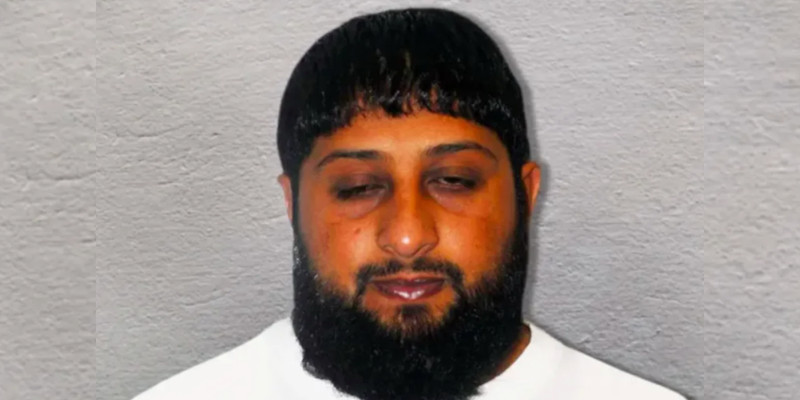

A senior al-Qaeda operative convicted of directing terrorist activity in Britain is due to face a new parole hearing next month, raising the prospect that he could be released after spending nearly two decades behind bars.
Rangzieb Ahmed, the most senior al-Qaeda figure ever convicted in the UK, is scheduled to appear before a Parole Board panel on February 13 as he renews his bid for release. Ahmed, now 48, has previously argued that he has changed during his time in prison.
Ahmed was convicted in 2008 after a jury at Manchester Crown Court found that he led a three-man terrorist cell preparing acts of mass murder against the British public. The case marked the first time someone in Britain was convicted of directing terrorist activity, a landmark ruling at the time.
Prosecutors said Ahmed played a central role in coordinating a terror network linked to senior figures within al-Qaeda. Investigators established connections between Ahmed, a former taxi driver, and individuals responsible for the July 7, 2005, London bombings, as well as the failed attacks carried out two weeks later.
Authorities believed an attack on British soil was imminent, though no specific target had been identified. The investigation uncovered three diaries containing contact details for senior al-Qaeda operatives written in invisible ink.
Ahmed was arrested by Pakistani intelligence services in August 2006, detained overseas for roughly a year, and later deported to the UK. He was handed a life sentence with a minimum term of ten years, according to GB News.
Despite having served well beyond that minimum term, multiple parole applications have been rejected. In September 2022, officials ruled that Ahmed remained too dangerous to be released. His most recent bid was blocked again in October 2024, after the Parole Board concluded that he continued to pose a risk to public safety.
A risk assessment submitted to the board stated that Ahmed remained “susceptible to indoctrination” and continued to present a genuine risk of reoffending. The sentencing judge had previously found that Ahmed was “dedicated to the cause of Islamic terrorism” and believed violence was his religious duty.
Ahead of the upcoming hearing, the Parole Board confirmed that hundreds of pages of evidence will be reviewed. The panel is expected to hear from probation officers, psychiatrists, psychologists, and prison staff involved in Ahmed’s case, as well as consider statements from victims.
Rangzieb Ahmed, the most senior al-Qaeda figure ever convicted in the UK, is scheduled to appear before a Parole Board panel on February 13 as he renews his bid for release. Ahmed, now 48, has previously argued that he has changed during his time in prison.
Ahmed was convicted in 2008 after a jury at Manchester Crown Court found that he led a three-man terrorist cell preparing acts of mass murder against the British public. The case marked the first time someone in Britain was convicted of directing terrorist activity, a landmark ruling at the time.
Prosecutors said Ahmed played a central role in coordinating a terror network linked to senior figures within al-Qaeda. Investigators established connections between Ahmed, a former taxi driver, and individuals responsible for the July 7, 2005, London bombings, as well as the failed attacks carried out two weeks later.
Authorities believed an attack on British soil was imminent, though no specific target had been identified. The investigation uncovered three diaries containing contact details for senior al-Qaeda operatives written in invisible ink.
Ahmed was arrested by Pakistani intelligence services in August 2006, detained overseas for roughly a year, and later deported to the UK. He was handed a life sentence with a minimum term of ten years, according to GB News.
Despite having served well beyond that minimum term, multiple parole applications have been rejected. In September 2022, officials ruled that Ahmed remained too dangerous to be released. His most recent bid was blocked again in October 2024, after the Parole Board concluded that he continued to pose a risk to public safety.
A risk assessment submitted to the board stated that Ahmed remained “susceptible to indoctrination” and continued to present a genuine risk of reoffending. The sentencing judge had previously found that Ahmed was “dedicated to the cause of Islamic terrorism” and believed violence was his religious duty.
Ahead of the upcoming hearing, the Parole Board confirmed that hundreds of pages of evidence will be reviewed. The panel is expected to hear from probation officers, psychiatrists, psychologists, and prison staff involved in Ahmed’s case, as well as consider statements from victims.