
For generations, smart kids have said that tariffs are anti-free trade, and are just taxes on American consumers, driving up inflation and leading to tariff wars with other countries that turn into isolationism. As though nothing has changed since Smoot-Hawley Act of the 1930s.
Well, a lot changed and kept changing. By the 1980s, almost every country had placed tariffs on imports, institutionalized government subsidies, and erected trade barriers, except the U.S. Everything from manufacturing to drug making was done in other countries, and our working middle class got hosed. The costs in jobs, hope, and lives has been incalculable.
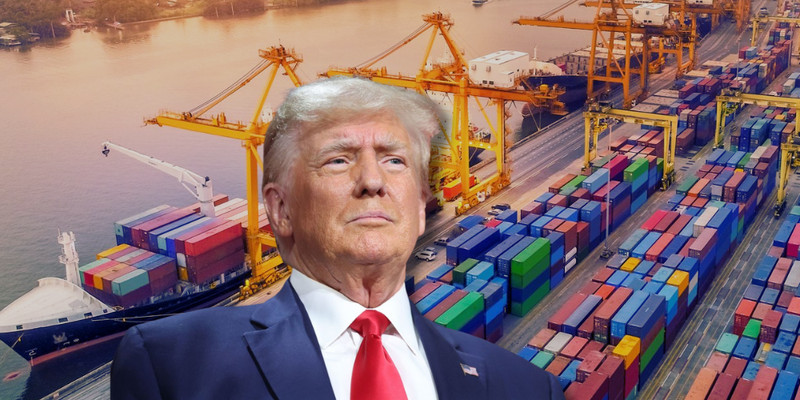
Trump promised it would change, and boy has it ever, creating a new economic world order that, unless unraveled by the courts and Democrats, will make generations of Americans safer and more prosperous — particularly the working class. And he is doing so by using tariffs in creative and flexible ways.
Commerce Secretary Howard Lutnick has been Trump's point man on tariffs, and his recent 90-minute interview on the All-In podcast provided the most in-depth, unfiltered explanation of the strategy and successes of using tariffs to secure great trade deals and cut drug prices. And it is a spectacular success.
Trump approaches the trade deals like a staircase, with the first country being the first step and the best deal. Each deal thereafter is another step up. The U.K. was first threatened with massive tariffs. After rapid negotiations, they were given a two-week window to sign the agreement.
Prime Minister Keir Starmer called Trump in the spring to reach an agreement, and they now have the best trade deal. Other countries wanted the U.K. deal, but the deals were now higher on the staircase. But next would be better than later. This motivated countries to start rushing to the table and make a deal swiftly.
With multiple negotiations underway, India was among the next expected. The U.S. put India on the clock, giving it three weeks. The deal was made, and it just required President Narendra Modi to call Trump, as Starmer had done. But he wouldn't do it.
So the following week, Indonesia, the Philippines, Vietnam, and Cambodia all signed their deals. A couple of weeks later, India calls back and says Modi is ready to call Trump to finalize the deal. But that was no longer on the table, Lutnick noted, because the deals were further up the staircase. India is struggling to get a deal.
Then came Japan, Europe, South Korea, El Salvador, Argentina, Ecuador, Thailand, and Switzerland in the following months. The immediate windfall is more than $500 billion in tariff revenues so far, and it could reach $1 trillion this year. That goes straight to the U.S. Treasury — just like American taxes.
But countries such as Japan are also making investments in the U.S. through their own firms, as investors in U.S. development, such as nuclear power plants that will provide billions more in financial returns to the U.S. Treasury. How many Americans know any of this?
But the tariffs have leveraged so much more. Drug companies here and worldwide make 75 percent of their revenues, and 100 percent of their profits, in America.
Lutnick gave an example of why this is the case. Say Americans pay $1,000 for a drug, but countries such as those in Europe with socialized medicine refuse to pay that. They offer $175, enough for a small profit. European leaders say they can't afford $1,000, so their patients won't have it. Eventually, the drug companies agreed to $175. The whole world's drug model was working that way — a deeply unfair rip-off of Americans.
Trump walked into the situation and said that it was changing. Trump wrote a letter to the 17 largest drug companies, most of which are U.S. companies, demanding that the U.S. receive Most Favored Nation prices. No one thought that would happen.
But the leverage America had is tariffs, because, of course, the drug companies make all their drugs overseas. (Remember the Covid surprises?) Lutnick says we can crush them with a 500 percent tariff. So we want the best prices of the big countries, not Third World nations. Second, the drug companies must reshore manufacturing. Meet those two, and we will waive tariffs while they reshore.
And so the drug companies dramatically cut prices for Americans. This saved tens of billions of dollars in drug costs. But more importantly, drugs are now accessible to Americans at a fair price.
Tariffs have been a hammer to reorder the global trade order and leverage a better quality of life for Americans. Unless you are an America-hater, that is an objectively good thing.
Rod Thomson is a former daily newspaper reporter and columnist, Salem radio host and ABC TV commentator, and current Founder of The Thomson Group, a Florida-based political consulting firm. He has eight children and seven grandchildren, and a rapacious hunger to fight for America for them. Follow him on Twitter at @Rod_Thomson. Email him at [email protected].