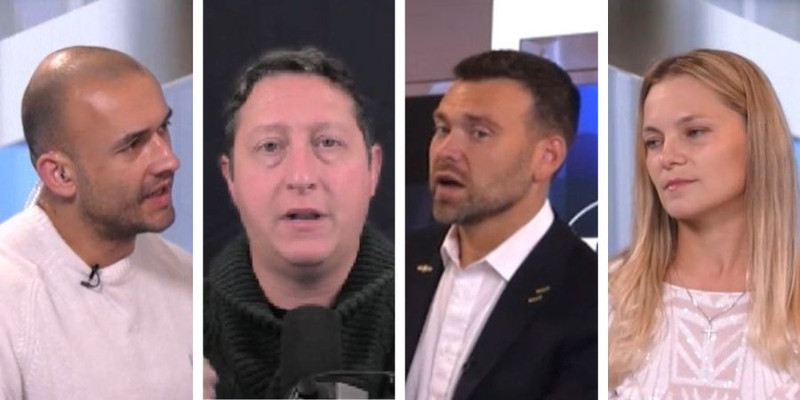
On Thursday’s Human Events Daily, Jack Posobiec hosted a panel featuring Charles Cornish-Dale, also known as Raw Egg Nationalist on X, pollster Rich Baris, and Tanya Posobiec to examine what they argued is a growing pattern of ideological violence on the American left. The discussion opened with the assassination of Charlie Kirk and the broader shift in political behavior.
Cornish-Dale said the pattern reflects what he called a uniquely left-wing “pathology.” He told the panel, “I think there is a very distinct leftist pathology that's very different actually from the right and we're certainly seeing that today in terms of political violence.”
He contrasted this with conservatives, who he argued still believe debate works. “The right actually, we're still relying on reason and debate… there's still this idea that what we need to do is convince leftists that violence is wrong by reason [and] debate.”
Jack Posobiec interjected that Kirk had been attempting precisely that. “Well, and Charlie was debating,” he said.
Cornish-Dale argued that Kirk’s murder shows what happens when debate meets an ideological movement that rejects it. “That should be a message, shouldn't it?... This is where it gets you,” he said. He described Kirk as “an incredibly reasonable person… an upstanding man who believed in the power of discussion and debate,” before noting, “No. You shoot him in the neck in public. So it was meant to be in public.”
Speaking about the murder of the Romanovs, he said Soviet leaders at least attempted to conceal their actions. “They hid it for a long time… they hid the bodies in a well or was it a mine shaft.” Posobiec added that even members of the Red Army refused to shake the hands of those involved, recalling the quote: “I don't shake the hand of an executioner.”
From there, Cornish-Dale introduced findings from his upcoming book “The Last Men: Liberalism and the Death of Masculinity,” arguing that ideological polarization may be affected by declining testosterone levels. The hormone, he said, shapes not only “muscle mass, libido, energy, motivation,” but also political attitudes. “It actually affects men's political affiliation,” he said, citing research showing testosterone increases “in-group preference.”
Posobiec noted that the book walks through “study by study… that it’s actually almost biological.” Cornish-Dale tied this to public reactions after Kirk’s assassination, describing how some argued Kirk’s words were harmful to the perpetrator’s “community.” Posobiec called that logic “a Rube Goldberg machine of causality.”
From the biological angle, the panel moved to hard data. Posobiec and Rich Baris examined newly compiled polling showing individuals who identify as transgender are significantly more likely than any other demographic group to justify political violence.
Posobiec opened the segment by asking, “The transgender shooters or people related to the transgender community like Tyler Robinson, why do we see such a high level of violence associated with them?”
Baris said the trend was already visible before the assassination of Charlie Kirk. “Even before Charlie’s assassination, we had seen a rash of mass shooting events and other shooting events where the perpetrator was trans, identified as trans,” he said.
Because the transgender population is statistically small, Baris said the study required oversampling. “You have to oversample these individuals because there’s such small percentages of the overall population you're studying,” he explained. With that approach, his team found what he described as a striking and consistent pattern.
One survey question asked whether “some people hold beliefs that are so bad, so offensive, that acts of violence are justified against them.” Baris said transgender respondents selected that option “more than twice as likely… than any other demographic group. It’s almost 70 percent.”
He said the response connects directly to a belief that opposing ideas represent a personal threat. It reflects “the perceived fear that other people's ideas pose a danger to them,” he said.
Baris said transgender respondents were also the most likely group to say that violent incidents were caused by the victims themselves. “They’re much more likely to say that the individual brought this upon themselves,” he noted. According to Baris, many respondents argued that verbal disagreements or differing viewpoints justify violent retaliation. “They not only justify, but they’re perfectly acceptable because, after all, words can hurt you too.”
Baris emphasized that the findings are not speculation. “There definitely is something there,” he said. “I’m just finding these results.”
Posobiec closed the segment by warning that the trend is accelerating. “This research is real. We can see it expanding,” he said.
Cornish-Dale said the pattern reflects what he called a uniquely left-wing “pathology.” He told the panel, “I think there is a very distinct leftist pathology that's very different actually from the right and we're certainly seeing that today in terms of political violence.”
He contrasted this with conservatives, who he argued still believe debate works. “The right actually, we're still relying on reason and debate… there's still this idea that what we need to do is convince leftists that violence is wrong by reason [and] debate.”
Jack Posobiec interjected that Kirk had been attempting precisely that. “Well, and Charlie was debating,” he said.
Cornish-Dale argued that Kirk’s murder shows what happens when debate meets an ideological movement that rejects it. “That should be a message, shouldn't it?... This is where it gets you,” he said. He described Kirk as “an incredibly reasonable person… an upstanding man who believed in the power of discussion and debate,” before noting, “No. You shoot him in the neck in public. So it was meant to be in public.”
Speaking about the murder of the Romanovs, he said Soviet leaders at least attempted to conceal their actions. “They hid it for a long time… they hid the bodies in a well or was it a mine shaft.” Posobiec added that even members of the Red Army refused to shake the hands of those involved, recalling the quote: “I don't shake the hand of an executioner.”
From there, Cornish-Dale introduced findings from his upcoming book “The Last Men: Liberalism and the Death of Masculinity,” arguing that ideological polarization may be affected by declining testosterone levels. The hormone, he said, shapes not only “muscle mass, libido, energy, motivation,” but also political attitudes. “It actually affects men's political affiliation,” he said, citing research showing testosterone increases “in-group preference.”
Posobiec noted that the book walks through “study by study… that it’s actually almost biological.” Cornish-Dale tied this to public reactions after Kirk’s assassination, describing how some argued Kirk’s words were harmful to the perpetrator’s “community.” Posobiec called that logic “a Rube Goldberg machine of causality.”
From the biological angle, the panel moved to hard data. Posobiec and Rich Baris examined newly compiled polling showing individuals who identify as transgender are significantly more likely than any other demographic group to justify political violence.
Posobiec opened the segment by asking, “The transgender shooters or people related to the transgender community like Tyler Robinson, why do we see such a high level of violence associated with them?”
Baris said the trend was already visible before the assassination of Charlie Kirk. “Even before Charlie’s assassination, we had seen a rash of mass shooting events and other shooting events where the perpetrator was trans, identified as trans,” he said.
Because the transgender population is statistically small, Baris said the study required oversampling. “You have to oversample these individuals because there’s such small percentages of the overall population you're studying,” he explained. With that approach, his team found what he described as a striking and consistent pattern.
One survey question asked whether “some people hold beliefs that are so bad, so offensive, that acts of violence are justified against them.” Baris said transgender respondents selected that option “more than twice as likely… than any other demographic group. It’s almost 70 percent.”
He said the response connects directly to a belief that opposing ideas represent a personal threat. It reflects “the perceived fear that other people's ideas pose a danger to them,” he said.
Baris said transgender respondents were also the most likely group to say that violent incidents were caused by the victims themselves. “They’re much more likely to say that the individual brought this upon themselves,” he noted. According to Baris, many respondents argued that verbal disagreements or differing viewpoints justify violent retaliation. “They not only justify, but they’re perfectly acceptable because, after all, words can hurt you too.”
Baris emphasized that the findings are not speculation. “There definitely is something there,” he said. “I’m just finding these results.”
Posobiec closed the segment by warning that the trend is accelerating. “This research is real. We can see it expanding,” he said.