
A lot of chatter has been circulating over the past few days regarding the government's redesignation of "professional" degrees. The most boisterous of the chatter are nurses and therapists in the mental health field – all, of course, fueled by the media stirring this panic.
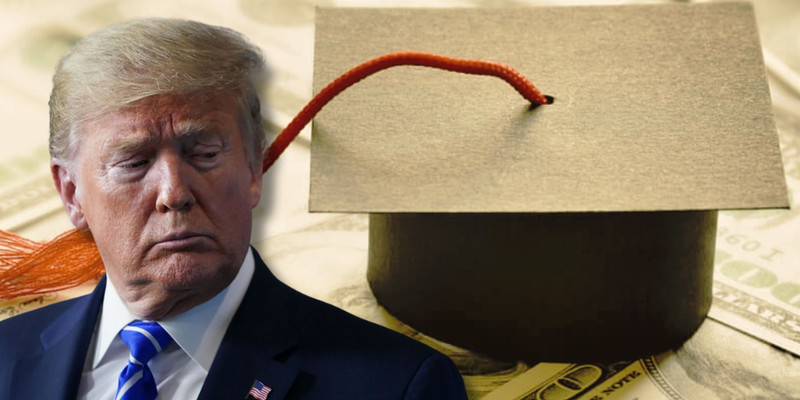
So what's really happening with the rollout of this portion of the One Big Beautiful Bill Act (OBBBA) signed by President Trump on July 4, 2025? Let's explain.
The government offered a generous accommodation to people seeking higher education through the Higher Education Act of 1965 – specifically in Title IV of the act, where the program established and expanded Federal Pell Grants, TRIO programs, the Federal Family Education Loan Program, Federal Work-Study, and Direct Loans, among others.
In order to qualify for one of these loans, your desired profession needed to fit certain criteria: completion of academic requirements for beginning practice in a given profession; a level of professional skill beyond a bachelor's degree; and generally requiring professional licensure. Through regulations, a non-exhaustive list of "professional" degrees was provided, which included: pharmacy (Pharm.D.), dentistry (D.D.S. or D.M.D.), veterinary medicine (D.V.M.), chiropractic (D.C. or D.C.M.), law (LL.B. or J.D.), medicine (M.D.), optometry (O.D.), osteopathic medicine (D.O.), podiatry (D.P.M., D.P., or Pod.D.), and theology (M.Div. or M.H.L.). Other programs also qualified if they fit the criteria, such as certain advanced degrees in public health, clinical psychology, naturopathic medicine, health administration, or nursing.
Graduate PLUS loans effectively allowed unlimited borrowing because students could take out loans up to the full cost of attendance with no fixed dollar cap. Repayments could be put off by staying enrolled at least half-time or by qualifying for economic hardship deferments or other forms of forbearance. This open-ended flow of federal money creates a real burden on taxpayers, who end up absorbing the cost when these massive loans go unpaid or are eventually forgiven.
OBBBA helps curb this issue. First, it puts the burden on the Department of Education (ED) to create and provide a list of what a "professional" student is, and second, it caps the amount allowed to be borrowed for the school year and lifetime. Interestingly enough, despite all the media outrage and extreme X posts, ED has not released a definitive list of professional careers. Those who claim that professions like nursing and mental health therapy are no longer considered "professional" are doing so without confirmation.
The Council on Social Work Education (CSWE) reports that they "are disheartened and concerned by the proposed definition and its potential impacts," noting that under the Department of Education's draft rulemaking for the OBBBA, programs will only qualify as "professional degree programs" if they share the same 4-digit Classification of Instructional Programs (CIP) code as the historically recognized fields. Because social work and several public-health-related disciplines fall outside those CIP groupings, CSWE warns that these careers may be excluded from the professional-degree category under the proposed regulations; therefore, no government loans.
And when borrowing, beginning July 1, 2026, federal borrowing for graduate school is capped: roughly $20,500 per year for non-professional graduate programs and about $50,000 per year for professional degrees like law and medicine, with lifetime maximums of ~$100,000 and ~$200,000, respectively. No more endless amounts for endless years until you graduate.
So what does this all mean?
It means that taxpayers will no longer pay for degrees that don't meet certain criteria. And if they do meet that criteria, there is a cap on how much the taxpayer will provide. That's all.
The outcry and tantrums thrown about the potential reclassification are largely a hit to one's ego. Nurses and therapists – under the proposed regulations – may not be deemed "professional" careers for the purpose of higher federal loan caps, and that's a punch to their esteem. Another unwarranted outcry is that these professions are dominantly run by females, so of course, the feminists are arguing that it's a direct attack on women in the workforce.
If we can set our egos aside for a moment, we can actually view this as a win-win. Taxpayers will no longer have to subsidize students and their decisions to attend college, and students will be held responsible for their financial and career decisions. No more incentives to take a career just because the government will "pay for it." Imagine that – a society where its citizens take responsibility for their decisions and are not dependent on their government to pay for them. Excellent. Soad Tabrizi is a licensed marriage and family therapist in eight states, with a private practice based in Orange County, CA (www.soadtabrizi.com). Soad is also the founder of www.ConservativeCounselors.com.