
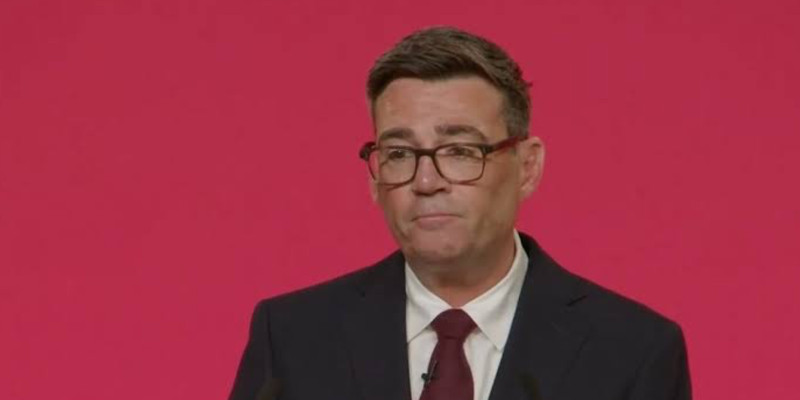

More than one in five working-age Britons are now economically inactive, highlighting the scale of the employment challenge facing Prime Minister Andy Burnham as he inherits an economy marked by rising unemployment, slowing job creation and a rapidly expanding welfare bill.
According to the latest labour market figures, 20.9% of people aged 16 to 64 are now economically inactive, meaning they are neither in work nor actively looking for a job. The BBC found this amounts to roughly 9.4 million working-age adults outside the labour force, excluding those officially counted as unemployed.
Overall, around 11 million working-age Britons do not currently have a paid job. While approximately 1.6 million are officially unemployed and actively seeking work, the far larger economically inactive population includes students, carers, early retirees, people with long-term illnesses and others who are not searching for employment.
The UK's unemployment rate has also been climbing and is up to 4.9% while the number of job vacancies has steadily fallen over the past two years, reflecting weaker demand for workers across the economy. According to the BBC, more than one million people aged 25 to 49 are out of work because of illness, while ill health and early retirement are the main reasons older workers have left the labour market.
The cost to taxpayers has risen sharply. The Institute for Fiscal Studies estimates Britain spent £52 billion on working-age health-related benefits during the 2024-25 fiscal year, up from £36 billion five years earlier, as welfare spending continued to accelerate. Businesses have warned that rising employment costs are making it harder to hire inexperienced workers. Employer payroll taxes have increased, while minimum wage rates for some younger workers have risen by as much as 84% since 2019, prompting concerns that entry-level jobs are becoming increasingly difficult to create.
The Starmer administration attempted to tighten eligibility for some health-related benefits as part of wider welfare reforms aimed at encouraging more people into work. However, the proposals sparked a significant backlash within Labour and were scaled back after opposition from MPs. New Prime Minister Andy Burnham has now inherited an economy facing persistent labour shortages alongside a spiraling migration crisis, with a growing number of people outside the workforce.
It is estimated that one million economically inactive young people cost the UK economy around £125 billion annually through lost productivity, reduced tax revenues and higher welfare spending.