
Prime Minister Benjamin Netanyahu announced Friday that Israel has officially recognized Somaliland as an independent and sovereign state, marking the first time a UN member country has granted formal recognition to the self-declared nation.
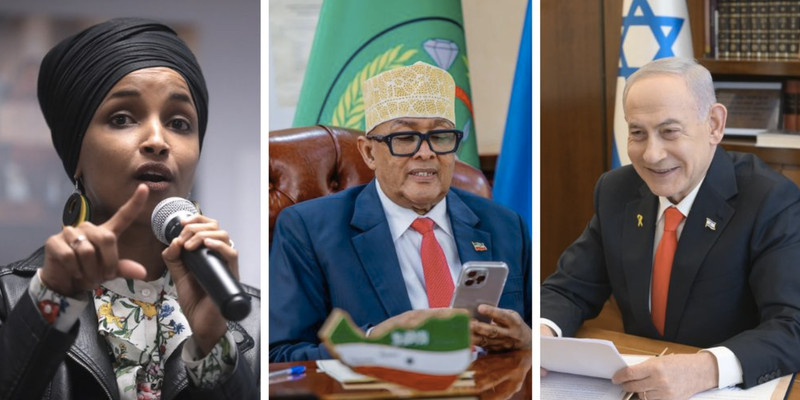
In a statement from the Prime Minister’s Office, Netanyahu confirmed that he and Foreign Minister Gideon Sa’ar signed a joint mutual declaration alongside Somaliland President HE Abdirahman Mohamed Abdilahi, formalizing the diplomatic breakthrough. Netanyahu congratulated Abdilahi and praised his leadership, pointing to Somaliland’s commitment to “security, stability, and peace.” He also invited the Somaliland president to visit Israel on an official state visit. The declaration, Netanyahu said, reflects the same spirit that animated the Abraham Accords, the US-brokered normalization agreements launched in 2020 under President Donald Trump.
President Abdilahi welcomed Israel’s recognition and described it as a turning point for Somaliland’s international standing. In a public statement, he said Somaliland would seek to join the Abraham Accords, framing the decision as part of a broader push toward regional and global peace. Abdilahi emphasized that Somaliland is committed to expanding partnerships, strengthening mutual prosperity, and promoting stability across both the Middle East and Africa. He also expressed appreciation for Israel’s stated efforts in combating terrorism and supporting regional peace initiatives. The Abraham Accords, first signed in 2020, led to Israel establishing formal diplomatic ties with the United Arab Emirates and Bahrain, with other countries joining later.
Somaliland has operated with effective autonomy since 1991, when Somalia collapsed into civil war. Since then, Somaliland has maintained a reputation for relative stability and functioning governance compared with Somalia’s internationally recognized government. Despite that record, Somaliland has failed to secure formal recognition from any other country until now.
Somalia, for its part, has long urged international governments and organizations to avoid recognition, arguing that Somaliland remains part of Somalia’s territory. Over the years, Somali officials have rallied diplomatic pressure to prevent foreign states from legitimizing Somaliland’s sovereignty. Somaliland hopes Israel’s decision will become a catalyst, encouraging additional countries to follow suit and opening doors to deeper diplomatic ties, expanded access to global markets, and increased engagement with international institutions.
The announcement has also fueled debate in the United States, where Rep. Ilhan Omar has publicly defended Somalia’s territorial claims and opposed recognizing Somaliland. Her position has drawn criticism from some analysts, especially as authorities in her home state of Minnesota intensify investigations into alleged fraud involving government programs.
Michael Rubin, a senior fellow at the American Enterprise Institute, argued that the fraud allegations highlight broader failures connected to Somalia’s governance, while Somaliland has pursued a more self-sustaining path. “The corruption exposed in Minnesota mirrors the governance failures that have plagued Somalia for decades,” Rubin told Fox News, adding that Somaliland “has charted a different course entirely, relying on internal accountability rather than international assistance.”
Minnesota has been embroiled in controversy after disclosures that fraud losses across multiple programs since 2018 may total billions of dollars. Federal investigators previously dismantled a $250 million scheme linked to the “Feeding Our Future” case, which led to 78 indictments and numerous convictions. The scandal regained momentum after a viral video posted by independent commentator Nick Shirley, who filmed shuttered daycare centers that allegedly billed the government millions while appearing to serve few, if any, children.
Omar has defended her support for the MEALS Act, which critics claim weakened oversight and helped enable misuse of funds. Israel’s move also comes amid reports that President Trump has shown interest in the idea of Somaliland recognition. Trump told the New York Post he has to "study" Netanyahu's plan. The two are set to meet this week in Florida.
In a statement from the Prime Minister’s Office, Netanyahu confirmed that he and Foreign Minister Gideon Sa’ar signed a joint mutual declaration alongside Somaliland President HE Abdirahman Mohamed Abdilahi, formalizing the diplomatic breakthrough. Netanyahu congratulated Abdilahi and praised his leadership, pointing to Somaliland’s commitment to “security, stability, and peace.” He also invited the Somaliland president to visit Israel on an official state visit. The declaration, Netanyahu said, reflects the same spirit that animated the Abraham Accords, the US-brokered normalization agreements launched in 2020 under President Donald Trump.
President Abdilahi welcomed Israel’s recognition and described it as a turning point for Somaliland’s international standing. In a public statement, he said Somaliland would seek to join the Abraham Accords, framing the decision as part of a broader push toward regional and global peace. Abdilahi emphasized that Somaliland is committed to expanding partnerships, strengthening mutual prosperity, and promoting stability across both the Middle East and Africa. He also expressed appreciation for Israel’s stated efforts in combating terrorism and supporting regional peace initiatives. The Abraham Accords, first signed in 2020, led to Israel establishing formal diplomatic ties with the United Arab Emirates and Bahrain, with other countries joining later.
Somaliland has operated with effective autonomy since 1991, when Somalia collapsed into civil war. Since then, Somaliland has maintained a reputation for relative stability and functioning governance compared with Somalia’s internationally recognized government. Despite that record, Somaliland has failed to secure formal recognition from any other country until now.
Somalia, for its part, has long urged international governments and organizations to avoid recognition, arguing that Somaliland remains part of Somalia’s territory. Over the years, Somali officials have rallied diplomatic pressure to prevent foreign states from legitimizing Somaliland’s sovereignty. Somaliland hopes Israel’s decision will become a catalyst, encouraging additional countries to follow suit and opening doors to deeper diplomatic ties, expanded access to global markets, and increased engagement with international institutions.
The announcement has also fueled debate in the United States, where Rep. Ilhan Omar has publicly defended Somalia’s territorial claims and opposed recognizing Somaliland. Her position has drawn criticism from some analysts, especially as authorities in her home state of Minnesota intensify investigations into alleged fraud involving government programs.
Michael Rubin, a senior fellow at the American Enterprise Institute, argued that the fraud allegations highlight broader failures connected to Somalia’s governance, while Somaliland has pursued a more self-sustaining path. “The corruption exposed in Minnesota mirrors the governance failures that have plagued Somalia for decades,” Rubin told Fox News, adding that Somaliland “has charted a different course entirely, relying on internal accountability rather than international assistance.”
Minnesota has been embroiled in controversy after disclosures that fraud losses across multiple programs since 2018 may total billions of dollars. Federal investigators previously dismantled a $250 million scheme linked to the “Feeding Our Future” case, which led to 78 indictments and numerous convictions. The scandal regained momentum after a viral video posted by independent commentator Nick Shirley, who filmed shuttered daycare centers that allegedly billed the government millions while appearing to serve few, if any, children.
Omar has defended her support for the MEALS Act, which critics claim weakened oversight and helped enable misuse of funds. Israel’s move also comes amid reports that President Trump has shown interest in the idea of Somaliland recognition. Trump told the New York Post he has to "study" Netanyahu's plan. The two are set to meet this week in Florida.