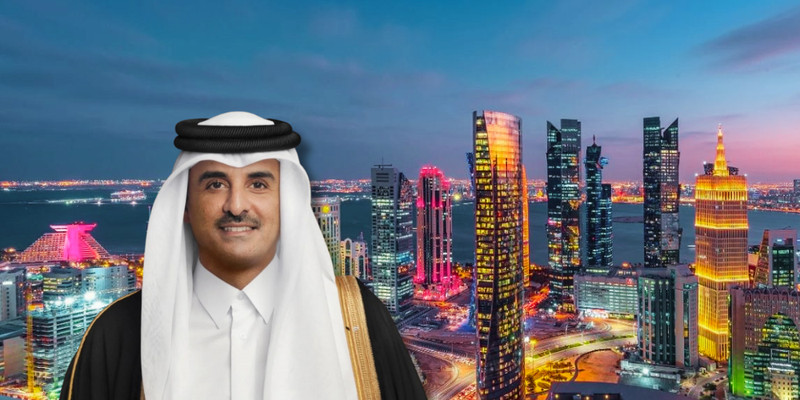

"The nation of Qatar, unfortunately, has historically been a funder of terrorism at a very high level," President Trump said in a 2017 tweet.
Eight years later, an announcement of new cooperation with the Qatari military on U.S. soil has caused some unease among those wary of Qatar's intentions. Critics argue Doha hasn't genuinely changed.
Eight years ago, Qatar was a pariah accused of bankrolling terrorism but able to escape accountability because of its strategic alliance with the U.S. In the late 90s, Qatar used its wealth to build and host American troops at the Al Udeid Air Base, a critical U.S. military hub for operations against regional threats. No Western leader had enough confidence in their brinkmanship to bring about change until President Trump supported the 2017 blockade that left Qatar isolated. It appears that Trump's gamble worked.
The blockade hammered Qatar's economy but spurred introspection as Doha dialed back its riskiest foreign entanglements.
Today, Qatar is a pivotal mediator in the world's most drawn-out conflicts, from facilitating the U.S.-Taliban negotiations to helping bridge the Israel-Hamas ceasefires. But their new image isn't merely the result of reforms. Qatar unleashed a lobbying juggernaut, spending hundreds of millions of dollars on influence in the U.S. since 2016. Amid Qatar's high-profile lobbying efforts, there's been persistent speculation about off-the-books influence campaigns, with reports suggesting covert funding to shape narratives beyond disclosed expenditures. The question about Qatar's status as a reformed nation is far from settled despite the current momentum in its favor. The key will be whether Doha sustains this course by stepping up to resolve conflicts in Yemen and Sudan while seeing out the peace process in Gaza.
Yemen's murky decade-long conflict is marked by complex proxy elements and multiple overlapping wars; Qatar's duplicity in the struggle, however, is clear. A July 2019 exposé accused the emirate of bankrolling both Houthi insurgents and al-Islah agitators to destabilize the region. The accusation was echoed by Yemeni Minister Moammar al-Eryani's statement that Doha's alignment with Iran's Houthi proxies implicates it in Yemen's bloodshed. Qatar can redeem itself by anchoring the Yemen peace process by engaging in the sober pragmatism they claim to now cherish instead of chaotically hedging bets on multiple sides.
Since the Al-Ula summit, when Qatar was reintegrated into the Gulf Cooperation Council, Qatar has restored its position as a power player. They could be a unique peace broker in this conflict, but what's holding them back? If Doha pressures the Houthis to halt missile strikes on Red Sea shipping routes, a source of tensions with Saudis, there could be an opening for a ceasefire. But Qatar will have to prove they favor humanitarian statecraft over strategic opportunism, not just in Yemen but in the fractured Horn of Africa as well.
Qatar's ties to the Sudanese Muslim Brotherhood are rooted in their broader alignment with the global Muslim Brotherhood network. Qatar has historically supported the group to counterbalance its Gulf rivals. Their financial support of the Brotherhood has led to offshoots in other regions of Africa and throughout the Middle East. The U.S. has reviewed designating the Muslim Brotherhood as a terrorist organization, but instead opted to sanction individual members because of the loosely connected nature of the group's structure.
If there was ever a time for Qatar to review its own relationship to the Muslim Brotherhood, it's now.
Qatar should jettison its lingering ties to them, starting with Sudan's bloodthirsty offshoot, which is one of several militias in the country credibly accused of war crimes. The group's presence in Sudan undermines the prospect of a transitional government, which clouds any framework peace agreement. Qatar can help eliminate an armed faction in the country by using its regional influence and wealth to help broker a lasting peace for a war-torn nation desperate for stability. But will they?
Skeptics of Qatar say their unique leverage over terror-linked groups like the Muslim Brotherhood, Hamas, and the Houthis raises critical questions.
Does Doha's influence over these groups stem from a covert alignment with terrorism? Is the humanitarian assistance they send to war-torn regions a way to funnel resources to destabilizing allies?
The world will gain profound insight into the seriousness of Qatar's reformation by watching its moves in Gaza in the coming weeks. They succeeded in helping facilitate the release of hostages, but Hamas's reluctance to fully disarm and the governance of Gaza are two hurdles they have to clear. Not to mention the logistical nightmares of verifying humanitarian aid delivery among internal hardliners. There's also the risk of Israeli reprisals if any violations of the peace deal occur. All this will place unyielding pressure on Qatar, testing any discreet ties the Gulf nation has to terrorism in the process.
High-ranking figures across the globe harbor suspicions that peace will unravel. Israeli Prime Minister Benjamin Netanyahu warned that "Hamas must be eliminated" to prevent a break in the ceasefire. U.S. Secretary of State Marco Rubio acknowledged there was a "short window" to execute the deal while noting Hamas were unreliable "savage terrorists."
Qatar holds the keys to preventing the fragile Gaza ceasefire from unraveling. Like with other global flashpoints for conflict, they can leverage their unparalleled access to terrorist networks to enforce compliance. If they falter, it could signal an unmasking of Qatar as a strategic opportunist that will always hedge its bets on extremists to preserve regional clout at the expense of true peace and stability.
R.C. Maxwell is a writer, Republican Political Strategist, and staff member at Turning Point Action