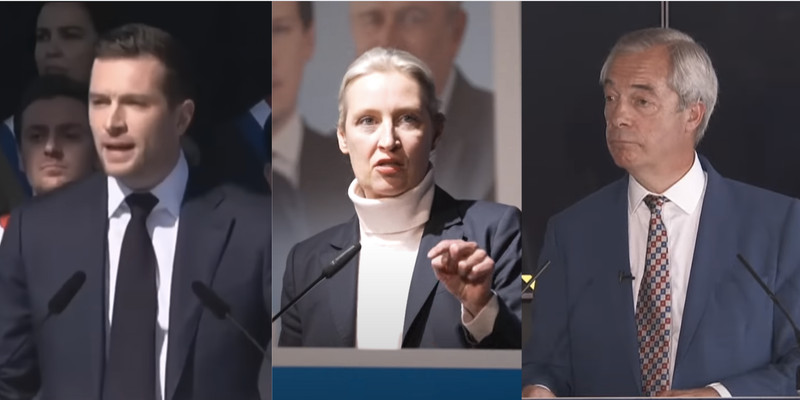

A survey released Tuesday by broadcaster RTL showed Germany’s Alternative for Germany (AfD) at 26 percent, ahead of the ruling Christian Democrats at 24 percent. For years, France’s National Rally has consistently led polls ahead of the country’s next presidential election in 2027. In Britain, Reform UK, led by Trump ally Nigel Farage, has topped most polls since April, per NBC News.
The AfD, which is led by Alice Weidel, was called “extremist” by the country’s intelligence agency, something US Secretary of State Marco Rubio called “tyranny in disguise.” Rubio wrote at the time, "Germany just gave its spy agency new powers to surveil the opposition. That’s not democracy—it’s tyranny in disguise. What is truly extremist is not the popular AfD—which took second in the recent election—but rather the establishment’s deadly open border immigration policies that the AfD opposes. Germany should reverse course."
Populist parties have also won government positions in Italy, Hungary, and other countries in recent years. Analysts cite high inflation, immigration failures, and declining trust in institutions as factors driving voters toward these movements.
Most European politicians in these movements reject the “far right” label. Analysts trace the rise of these parties to the 2008 financial crisis, which prompted government spending cuts and reduced living standards. The Arab Spring of 2011 and the subsequent refugee crisis in Europe also contributed, says NBC News. More recent pressures, including the Covid pandemic and the war in Ukraine, have increased the appeal of populist messaging as governments continue to shell out billions while their countrymen go hungry.
Hans-Jakob Schindler, senior director of the Counter Extremism Project, pointed to the role of social media in their growth. “They are masters of using social media much better than any of the more established parties,” he said to NBC News.